infiniti science

The obvious is well hidden. The Truth is not a theory. . . . . . . Simplex veri sigillum

Historical Sketch of Mysticism – A Biography in the Christian Era

Evelyn Underhill: Mysticism

Appendix
Historical Sketch of Mysticism

If we try to represent the course of Mysticism in Europe during the Christian period by the common device of a chronological curve, showing by its rises and falls as it passes across the centuries the absence or preponderance in any given epoch of mystics and mystical thought, we shall find that the great periods of mystical activity tend to correspond with the great periods of artistic, material, and intellectual civilization. As a rule, they come immediately after, and seem to complete such periods: those outbursts of vitality in which man makes fresh conquests over his universe apparently producing, as their last stage, a type of heroic character which extends these victories to the spiritual sphere. When science, politics, literature, and the arts — the domination of nature and the ordering of life — have risen to their height and produced their greatest works, the mystic comes to the front; snatches the torch, and carries it on. It is almost as if he were humanity’s finest flower; the product at which each great creative period of the race had aimed.
Thus the thirteenth century expressed to perfection the medieval ideal in religion, art, philosophy, and public life. It built the Gothic cathedrals, put the finishing touch to the system of chivalry, and nourished the scholastic philosophers. It has many saints, but not very many mystics; though they increase in number as the century draws on. The fourteenth century is filled by great contemplatives; who lifted this wave of activity to spiritual levels, and brought the intellectual vigour, the romance and passion of the mediaeval temperament, to bear upon the deepest mysteries of the transcendental life. Again, the sixteenth century, that period of abounding vitality which left no corner of existence unexplored, which produced the Renaissance and the Humanists and remade the mediaeval world, had hardly reached its full development before the great procession of the post-Renaissance mystics, with St. Teresa at their head, began. If life, then — the great and restless life of the race — be described under the trite metaphor of a billowy sea, each great wave as it rises from the deep bears the mystic type upon its crest.
Our curve will therefore follow close behind that other curve which represents the intellectual life of humanity. Its course will be studded and defined for us by the names of the great mystics; the possessors of spiritual genius, the pathfinders to the country of the soul. These starry names are significant not only in themselves but also as links in the chain of manes growing spiritual history. They are not isolated phenomena, but are related to one another. Each receives something from his predecessors: each by his personal adventures enriches it, and hands it on to the future. As we go on, we notice more and more this cumulative power of the past. Each mystic, original though he be, yet owes much to the inherited acquirement of his spiritual ancestors. These ancestors form his tradition, are the classic examples on which his education is based; and from them he takes the language which they have sought out and constructed as a means of telling their adventures to the world. It is by their help too, very often, that he elucidates for himself the meaning of the dim perceptions of his amazed soul. From his own experiences he adds to this store; and hands on an enriched tradition of the transcendental life to the next spiritual genius evolved by the race. Hence the names of the great mystics are connected by a thread; and it becomes possible to treat them as subjects of history rather than of biography.
I have said that this thread forms a curve, following the fluctuations of the intellectual life of the race. At its highest points, the names of the mystics are clustered most thickly, at its descents they become fewer and fewer, at the lowest points they die away. Between the first century A.D. and the nineteenth, this curve exhibits three great waves of mystical activity besides many minor fluctuations. They correspond with the close of the Classical, the Mediaeval, and the Renaissance periods in history: reaching their highest points in the third, fourteenth, and seventeenth centuries. In one respect, however, the mystic curve diverges from the historical one. It rises to its highest point in the fourteenth century, and does not again approach the level it there attains; for the mediaeval period was more favourable to the development of mysticism than any subsequent epoch has been. The fourteenth century is as much the classic moment for the spiritual history of our race as the thirteenth is for the history of Gothic, or the fifteenth for that of Italian art.
The names upon our curve, especially during the first ten centuries of the Christian era, are often separated by long periods of time. This, of course, does not necessarily mean that these centuries produced few mystics: merely that few documents relating to them have survived. We have now no means of knowing, for instance, the amount of true mysticism which may have existed amongst the initiates of the Greek or Egyptian Mysteries; how many advanced but inarticulate contemplatives there were amongst the Alexandrian Neo-platonists, amongst the pre-Christian communities of contemplatives described by Philo , the deeply mystical Alexandrian Jew (20 B.C.-A.D. 40), or the innumerable Gnostic sects which replaced in the early Christian world the Orphic and Dionysiac mystery-cults of Greece and Italy. Much real mystical inspiration there must have been, for we know that from these centres of life came many of the doctrines best loved by later mystics: that the Neoplatonists gave them the concepts of Pure Being and the One, that the New Birth and the Spiritual Marriage were foreshadowed in the Mysteries, that Philo anticipated the theology of the Fourth Gospel.
As we stand at the beginning of the Christian period we see three great sources whence its mystical tradition might have been derived. These sources are Greek, Oriental, and Christian— i.e. , primitive Apostolic—doctrine or thought. As a matter of fact all contributed their share: but where Christianity gave the new vital impulse to transcendence, Greek and Oriental thought provided the principal forms in which it was expressed. The Christian religion, by its very nature, had a profoundly mystical side. Putting the personality of its Founder outside the limits of the present discussion, St. Paul and the author of the Fourth Gospel are obvious instances of mystics of the first rank amongst its earliest missionaries. Much of the inner history of primitive Christianity still remains unknown to us, but in what has been already made out we find numerous, if scattered, indications that the mystic life was indigenous in the Church and the natural mystic had little need to look for inspiration outside the limits of his creed. Not only the epistles of St. Paul and the Johannine writings, but also the earliest liturgic fragments which we possess, and such primitive religious poetry as the “Odes of Solomon” and the “Hymn of Jesus,” show how congenial was mystical expression to the mind of the Church how easily that Church could absorb and transmute the mystic elements of Essene, Orphic, and Neoplatonic thought.
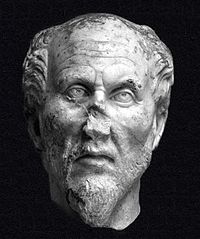
Towards the end of the second century this tendency received brilliant literary expression at the hands of Clement of Alexandria (c. 160-220) — who first adapted the language of the pagan Mysteries to the Christian theory of the spiritual life — and his great pupil Origen (c. 183-253). Nevertheless, the first person after St. Paul of whom it can now be decisively stated that he was a practical mystic of the first rank, and in whose writings the central mystic doctrine of union with God is found, is a pagan. That person is Plotinus , the great Neoplatonic philosopher of Alexandria (A.D. 205-c. 270). His mysticism owes nothing to the Christian religion, which is never mentioned in his works. Intellectually it is based on the Platonic philosophy, and also shows the influence of the Mysteries, and perhaps certain of the Oriental cults and philosophies which ran riot in Alexandria in the third century. Ostensibly a metaphysician, however, Plotinus possessed transcendental genius of a high order, and was consumed by a burning passion for the Absolute: and the importance of his work lies in the degree in which his intellectual constructions are made the vehicle of mystical experience. His disciple Porphyry has left it on record that on four occasions he saw his master rapt to ecstatic union with “the One.”
The Neoplatonism of which Plotinus was the greatest exponent became the medium in which much of the mysticism — both Christian and pagan—of the first six centuries was expressed. But since mysticism is a way of life — an experience of Reality, not a philosophic account of Reality—Neoplatonism, and the mysticism which used its language, must not be identified with one another. Porphyry (233-304) the favourite pupil of Plotinus seems to have inherited something of his master’s mysticism, but Neoplatonism as a whole was a confused, semi-religious philosophy, containing many inconsistent elements. Appearing when the wreck of paganism was complete, but before Christianity had conquered the educated world, it made a strong appeal to the spiritually minded; and also to those who hankered after the mysterious and the occult. It taught the illusory nature of all temporal things, and in the violence of its idealism outdid its master Plato. It also taught the existence of an Absolute God, the “Unconditioned One,” who might be known in ecstasy and contemplation; and here it made a direct appeal to the mystical instincts of men. Those natural mystics who lived in the time of its greatest popularity found in it therefore a ready means of expressing their own intuitions of reality. Hence the early mysticism of Europe, both Christian and pagan, has come down to us in a Neoplatonic dress; and speaks the tongue of Alexandria rather than that of Jerusalem, Athens, or Rome.
The influence of Plotinus upon later Christian mysticism was enormous though indirect. During the patristic period all that was best in the spirit of Neoplatonism flowed into the veins of the Church. St. Augustine (A.D. 354-430) and Dionysius the Areopagite (writing between 475 and 525) are amongst his spiritual children; and it is mainly through them that his doctrine reached the mediaeval world. Proclus (412-c. 490), the last of the pagan philosophers, also derives from his teaching. Through these three there is hardly one in the long tale of the European contemplatives whom his powerful spirit has failed to reach.
The mysticism of St. Augustine is partly obscured for us by the wealth of his intellectual and practical life: yet no one can read the “Confessions” without being struck by the intensity and actuality of his spiritual experience, and the characteristically mystical formula under which he apprehended Reality. It is clear that when he composed this work he was already an advanced contemplative. The immense intellectual activities by which he is best remembered were fed by the solitary adventures of his soul. No merely literary genius could have produced the wonderful chapters in the seventh and eighth books, or the innumerable detached passages in which his passion for the Absolute breaks out. Later mystics, recognizing this fact, constantly appeal to his authority, and his influence ranks next to that of the Bible in the formation of the mediaeval school.
Second only to that of St. Augustine was the influence exercised by the strange and nameless writer who chose to ascribe his works to Dionysius the Areopagite, the friend of St. Paul, and to address his letters upon mysticism to Paul’s fellow-worker, Timothy. The pseudo-Dionysius was probably a Syrian monk. The patristic quotations detected in his work prove that he cannot have written before A.D.475; it is most likely that he flourished in the early part of the sixth century. His chief works are the treatises on the Angelic Hierarchies and on the Names of God, and a short but priceless tract on mystical theology. From the ninth century to the seventeenth these writings nourished the most spiritual intuitions of men, and possessed an authority which it is now hard to realize. Medieval mysticism is soaked in Dionysian conceptions. Particularly in the fourteenth century, the golden age of mystical literature, the phrase “Dionysius saith” is of continual recurrence: and has for those who use it much the same weight as quotations from the Bible or the great fathers of the Church.
The importance of Dionysius lies in the fact that he was the first and for a long time the only, Christian writer who attempted to describe frankly and accurately the workings of the mystical consciousness, and the nature of its ecstatic attainment of God. So well did he do h s work that later contemplatives, reading him, found their most sublime experiences reflected and partly explained. Hence in describing those experiences, they adopted his language and metaphors; which afterwards became the classic terms of contemplative science. To him Christian literature owes the paradoxical concept of the Absolute Godhead as the “Divine Dark,” the Unconditioned, “the negation of all that is ”— i.e., of all that the surface consciousness perceives — and of the soul’s attainment of the Absolute as a “divine ignorance,” a way of negation. This idea is common to Greek and Indian philosophy. With Dionysius it enters the Catholic fold.
Side by side with the Neoplatonic mysticism of St. Augustine and Dionysius runs another line of spiritual culture, hardly less important for the development of the contemplative life. This takes its rise among the Fathers of the Egyptian desert, whose heroic spirituality was a contributory factor in St. Augustine’s conversion. It finds beautiful expression in the writings of St. Marcarius of Egypt (c. 295-386), the disciple of St. Anthony and friend of St. Basil, and reaches the West through the “Dialogues” of John Cassian (c. 350- ), one of the most important documents for the history of Christian mysticism. The fruit of a seven-year pilgrimage among the Egyptian monasteries, and many conversations on spiritual themes with the monks, we find in these dialogues for the first time a classified and realistic description of the successive degrees of contemplative prayer, and their relation to the development of the spiritual life. Adopted by St. Benedict as part of the regular spiritual food of his monks, they have had a decisive influence on the cloistered mysticism of the Middle Ages. Their sober and orderly doctrine, destined to be characteristic of the Roman Church, received fresh emphasis in the works of St. Gregory the Great (540-604), which also helped to form the souls of succeeding generations of contemplatives.
We have therefore, at the opening of the Middle Ages, two great streams of spiritual culture; the Benedictine, moderate and practical, formed chiefly on Cassian and St. Gregory, and the Neoplatonic, represented by Dionysius the Areopagite, and in a less exclusive form by St. Augustine. The works of Dionysius were translated from Greek into Latin about A.D. 850 by the Irish philosopher and theologian, John Scotus Erigena , one of the scholars assembled at the court of Charlemagne: and this event marks the beginning of a full tradition of mysticism in Western Europe. John the Scot, many of whose own writings exhibit a strong mystical bias, is the only name in this period which the history of mysticism can claim. We are on the descending 458line of the “Dark Ages”: and here the curve of mysticism runs parallel with the curves of intellectual and artistic activity.
The great current of medieval mysticism first shows itself in the eleventh century, and chiefly in connection with the Benedictine Order for the work of such monastic reformers as St. Romuald (c. 950-1027) St. Peter Damian (1007-1072), and St. Bruno (1032-1101), the founder of the Grande Chartreuse, was really the effort of contemplative souls to establish an environment in which the mystical life could be lived. Thus too we must regard at least a large proportion of the hermits and solitaries who became so marked a feature in the religion of the West. At this period mysticism was not sharply distinguished from the rest of the religious complex, but was rather the realistic experience of the truths on which religion rests. It spread mainly through personal instruction and discipleship. Its literary monuments were few among the most important and widely influential being the “Meditations” of St. Anselm (1033-1109), which, disentangled by recent scholarship from the spurious material passing under his name, are now seen to have been a chief channel of transmission for the Augustinian mysticism which dominated the early Middle Ages. The general religious revival of the twelfth century had its marked mystical aspect, and produced four personalities of great historical importance: the Benedictines St. Bernard of Clairvaux (1091-1153), St. Hildegarde of Bingen (1098-1179), and Joachim of Flora (1132-1202); and the Scotch or Irish Augustinian Richard of St. Victor (ob. c. 1173), whom Dante held to be “in contemplation more than man.” Richard’s master and contemporary, the scholastic philosopher Hugh (1097-1141) of the same Abbey of St. Victor at Paris, is also generally reckoned amongst the mystics of thus period, but with less reason; since contemplation occupies a small place in his theological writings. In spite of the deep respect shown towards him by Aquinas and other theologians, Hugh’s influence on later mystical literature was slight. The spirit of Richard and of St. Bernard, on the contrary, was destined to dominate it for the next two hundred years. With them the literature of mediaeval mysticism properly so called begins.
This literature Falls into two classes: the personal and the didactic. Sometimes, as in a celebrated sermon of St. Bernard, the two are combined; the teacher appealing to his own experience in illustration of his theme. In the works of the Victorines the attitude is didactic: one might almost say scientific. In them mysticism — that is to say, the degrees of contemplation, the training and exercise of the spiritual sense — takes its place as a recognized department of theology. It is in Richard’s favourite symbolism, “Benjamin,” the beloved child of Rachel, emblem of the Contemplative Life: and in his two chief works, “Benjamin Major” and “Benjamin Minor,” it is classified and described in all its branches. Though mysticism was for Richard the “science of the heart” and he had little respect for secular learning, yet his solid intellectuality did much to save the medieval school from the perils of religious emotionalism. In his hands the antique mystical tradition which flowed through Plotinus and the Areopagite, was codified and transmitted to the mediaeval world. Like his master, Hugh, he had the mediaeval passion for elaborate allegory, neat arrangement, rigid classification, and significant numbers in things. As Dante parcelled out Heaven, Purgatory, and Hell with mathematical precision, and proved that Beatrice was herself a Nine, so these writers divide and subdivide the stages of contemplation, the states of the soul, the degrees of Divine Love: and perform terrible tours de force in the course of compelling the ever-variable expressions of man’s spiritual vitality to fall into orderly and parallel series, conformable to the mystic numbers of Seven, Four, and Three.
The influence of Richard of St. Victor, great as it was, is exceeded by that of St. Bernard; the dominant spiritual personality of the twelfth century. Bernard’s career of ceaseless and varied activity sufficiently disproves the “idleness” of the contemplative type. He continued and informed with his own spirit the Benedictine tradition, and his writings quickly took their place, with those of Richard of St. Victor, among the living forces which conditioned the development of later mysticism. Both these mystics exerted a capital influence on the formation of our national school of mysticism in the fourteenth century. Translations and paraphrases of the “Benjamin Major,” “Benjamin Minor,” and other works of Richard of St. Victor, and of various tracts and epistles of St. Bernard, are constantly met with in the MS. collections of mystical and theological literature written in England in the thirteenth and fourteenth centuries. An early paraphrase of the “Benjamin Minor,” sometimes attributed to Richard Rolle, was probably made by the anonymous author of “The Cloud of Unknowing,” who was also responsible for the first appearance of the Areopagite in English dress.
If mediaeval mysticism in the West develops mainly under the sane and enduring influence of the Victorines and St. Bernard, in Germany and Italy it appeared in a more startling form; seeking, in the prophetic activities of St. Hildegarde of Bingen and the Abbot Joachim of Flora, to influence the course of secular history. In St. Hildegarde and her fellow-Benedictine St. Elizabeth of Shönau (1138-1165) we have the first of that long line of women mystics — visionaries, prophetesses, and political reformers — combining spiritual transcendence with great practical ability, of whom St. Catherine of Siena is probably the greatest example. Exalted by the strength of their spiritual intuitions, they emerged from an obscure life to impose their wills, and their reading of events, upon the world. From the point of view of Eternity, in whose light they lived, they attacked the sins of their generation. St. Hildegarde, a woman of powerful character, apparently possessed of abnormal psychic gifts, was driven by that Living Light which was her inspiration to denounce the corruptions of Church and State. In the inspired letters which she sent like firebrands over Europe, we see German idealism and German practicality struggling together; the unflinching description of abuses, the vast poetic vision by which they are condemned. These qualities are seen again in the South German mystics of the next century: the four Benedictine women of genius, who had their home in the convent of Helfde. These are the Nun Gertrude (Abbess 1251-1291) and her sister St. Mechthild of Hackborn (ob. 1310), with her sublime symbolic visions: then, the poet of the group, the exquisite Mechthild of Magdeburg (1212-1299), who, first a béguine at Magdeburg, where she wrote the greater part of “The Flowing Light of the Godhead,” came to Helfde in 1268; last the celebrated St. Gertrude the Great (1256-1311). In these contemplatives the political spirit is less marked than in St. Hildegarde: but religious and ethical activity takes its place. St. Gertrude the Great is a characteristic Catholic visionary of the feminine type: absorbed in her subjective experiences, her often beautiful and significant dreams, her loving conversations with Christ and the Blessed Virgin. Close to her in temperament is St. Mechthild of Hackborn; but her attitude as a whole is more impersonal, more truly mystic. The great symbolic visions in which her most spiritual perceptions are expressed are artistic creations rather than psycho-sensorial hallucinations, and dwell little upon the humanity of Christ, with which St. Gertrude is constantly occupied. The terms in which Mechthild of Magdeburg — an educated and well-born woman, half poet, half seer — describes her union with God are intensely individual, and apparently owe more to the romantic poets of her time than to earlier religious writers. The works of this Mechthild, early translated into Latin, were read by Dante. Their influence is traceable in the “Paradiso”; and by some scholars she is believed to be the Matilda of his Earthly Paradise, though others give this position to her sister-mystic, St. Mechthild of Hackborn.
Modern scholarship tends more and more to see in the strange personality of the Abbot Joachim of Flora, whom Dante placed among the great contemplatives in the Heaven of the Sun, the chief influence in the development of Italian mysticism. The true import of his prophecies, which proclaimed in effect the substitution of mystical for institutional Christianity, was only appreciated after his death. But their prestige grew during the course of the thirteenth century; especially after the appearance of the mendicant friars, who seemed to fulfil his prediction that the new era of the Holy Spirit would be brought in about the year 1260 by two new Orders who would live in poverty the spiritual life. From this time, Joachism found its chief vehicle of expression through Franciscan mysticism of the more revolutionary sort. Though there is no evidence that St. Francis of Assisi (1182-1226) knew the prophecies of the “Eternal Gospel,” he can hardly have grown up without some knowledge of them, and also of the Cathari and other semi-mystical heresies — many of them stressing the idea of evangelical poverty — which were spreading through Italy from the north. But the mystical genius which may have received food from these sources was itself strikingly original; the spontaneous expression of a rare personality, a great spiritual realist who admitted no rival to the absolute claims of the mystical life of poverty and joy. St. Francis was untouched by monastic discipline, or the writings of Dionysius or St. Bernard. His only literary influence was the New Testament. With him, mysticism comes into the open air, seeks to transform the stuff of daily life, speaks the vernacular, turns the songs of the troubadours to the purposes of Divine love; yet remains completely loyal to the Catholic Church. None who came after him succeeded in recapturing his secret which was the secret of spiritual genius of the rarest type: but he left his mark upon the history, art and literature of Western Europe, and the influence of his spirit still lives.
In a general sense it is true to say that Italian mysticism descends from St. Francis, and in its first period seems almost to be the prerogative of his disciples; especially those of the “Spiritual” party who strove to maintain his ideals in their purity. It is here that we find Franciscan ardour and singlemindedness in alliance with apocalyptic notions deriving from Joachist ideas. In Provence, a widespread mystical movement coloured by Joachism was led by Hugues de Digne and his sister St. Douceline ( n . 1214); in whom we find a spirit which, like that of Francis, could find the Divine through flowers and birds and simple natural things. In Italy, nourished by the influence of such deeply mystical friars as John of Parma (ob. 1288 ) and John of La Verna , this Franciscan spirituality entered into conflict with the ecclesiastical politics of the day; taking up that duty of denouncing the corruptions of the Church, which has so often attracted the mystics. Here the typical figure is that of Jacopone da Todi ( 1228-1306), the converted lawyer turned mystical poet. On one hand deeply influenced by St. Augustine and Dionysius the Areopagite, on the other the devoted exponent of the Founder’s ideals, his “spiritual songs” lift Franciscan mysticism to the heights of ecstatic rapture and literary expression; whilst his savage castigations of the Papacy give him a place among the great mediaeval satirists. Jacopone’s poems have been shown by Von Hügel to have had a formative influence on St. Catherine of Genoa; and have probably affected many other mystics, not only in Italy but elsewhere, for they quickly attained considerable circulation.
In his contemporary the Blessed Angela of Foligno (1248-1309) who was converted from a sinful life to become a tertiary hermit of the Franciscan Order we have a mystic of the first rank whose visions and revelations place her in the same class as St. Catherine of Genoa and St. Teresa. Known to her followers as the Mistress of Theologians, and numbering among her disciples the brilliant and tempestuous “spiritual” friar Ubertino da Casale, the lofty metaphysical element in Angela’s mysticism suggests the high level of spiritual culture achieved in Franciscan circles of her time. By the sixteenth century her works, translated into the vernacular, had taken their place amongst the classics of mysticism. In the seventeenth they were largely used by St. François de Sales, Madame Guyon, and other Catholic contemplatives. Seventeen years older than Dante, whose great genius properly closes this line of spiritual descent, she is a link between the thirteenth and fourteenth centuries in Italian mysticism.
We now approach the Golden Age of Mysticism: and at the opening of that epoch, dominating it by their peculiar combination of intellectual and spiritual power stand the figures of the “Seraphic and Angelic Doctors,” St. Bonaventura , the Franciscan (1221-1274), and St. Thomas Aquinas , the Dominican (1226-1274). As with St. Augustine, the intellectual greatness of St. Thomas has obscured his mystical side, whilst St. Bonaventura, the apostle of a wise moderation, may easily appear to the hurried reader the least mystical of the Franciscan mystics. Yet both were contemplatives, and because of this were able to interpret to the medieval world the great spiritual tradition of the past. Hence their immense influence on the mystical schools of the fourteenth century. It is sometimes stated that these schools derive mainly from St. Bonaventura, and represent an opposition to scholastic theology; but as a matter of fact their greatest personalities — in particular Dante and the German Dominicans — are soaked in the spirit of Aquinas, and quote his authority at every turn.
In Europe the mystic curve is now approaching its highest point. In the East that point has already been passed. Sufi, or Mahommedan mysticism, appearing in the eighth century in the beautiful figure of Rabi’a , the “Moslem St. Teresa” (717-801), and continued by the martyr Al Hallaj (ob. 922), attains literary expression in the eleventh in the “Confessions” of Al Ghazzali (1058-1111), and has its classic period in the thirteenth in the works of the mystic poets ‘Attar (c. 1140-1234), Sadi (1184-1263), and the saintly Jalalu ‘d Din (1207-1273). Its tradition is continued in the fourteenth century by the rather erotic mysticism of Hafiz (c. 1300-1388) and his successors, and in the fifteenth by the poet Jámí (1414-1492).
Whilst Hafiz already strikes a note of decadence for the mysticism of Islam, the year 1300 is for Western Europe a vital year in the history of the spiritual life. Mystics of the first rank are appearing, or about to appear. The Majorcan scholar-mystic Ramon Lull (ob. 1315) is drawing to the end of his long life. In Italy Dante (1265-1321) is forcing human language to express one of the most sublime visions of the Absolute which has ever been crystallized into speech. He inherits and fuses into one that loving and artistic reading of reality which was the heart of Franciscan mysticism, and that other ordered vision of the transcendental world which the Dominicans through Aquinas poured into the stream of European thought. For the one the spiritual world was all love: for the other all law. For Dante it was both. In the “Paradiso” his stupendous genius apprehends and shows to us a Beatific Vision in which the symbolic systems of all great mystics and many whom the world does not call mystics — of Dionysius, Richard, St. Bernard, Mechthild, Aquinas, and countless others — are included and explained.
The moment in which the “Commedia” was being written coincides with the awakening of mystical activity in Germany and Flanders. Between the years 1280 and 1309 was produced, probably in the Liege district and under Franciscan influence, the curious anonymous work which is now only known to us in Latin and English translations — “The Mirror of Simple Souls.” This long treatise, clearly influenced by Dionysius, the Victorines, and the twelfth-century tract known as the “Letter to the Brethren of Mons Dei,” is a piece of mystical literature of an advanced kind, often fringing the borders of orthodoxy and looking forward to the speculative Flemish mysticism of the fourteenth century. Its writer was probably contemporary with the founder of this school; the great Dominican scholar Meister Eckhart (1260-1327), who resembled Dante in his combination of mystical insight with intense intellectual power, and laid the foundations at once of German philosophy and German mysticism. These two giants stand side by side at the opening of the century; perfect representatives of the Teutonic and Latin instinct for transcendental reality.
Eckhart, though only a few years younger than St. Gertrude the Great, seems to belong to a different world. His commanding personality, his genius for the supra-sensible nourished by the works of Dionysius and Erigena, moulded and inspired all whom it came near. The German and Flemish mystics of the fourteenth and fifteenth centuries, differing much in temperament from their master and from each other, have yet something in common: something which is shared by no other school. This something is derived from Eckhart; for all have passed under his hand, being either his immediate disciples, or the friends or pupils of his disciples. Eckhart’s doctrine is chiefly known to us by reports of his vernacular sermons delivered at Strassburg; then the religious centre of Germany. In these we see him as a teaching mystic full of pastoral zeal, but demanding a high level both of intellect and spirituality in those he addressed. Towards the end of his life he fell into disgrace. A number of propositions extracted from his writings, and representing his more extreme views, were condemned by the Church as savouring of pantheism and other heresies: and certainly the violence and daring of his language laid him open to misconstruction. In his efforts to speak of the unspeakable he was constantly betrayed into expressions which were bound to seem paradoxical and exaggerated to other men. Eckhart’s influence, however, was little hurt by ecclesiastical condemnation. His pupils, though they remained loyal Catholics, contrived also to be loyal disciples. To the end of their lives their teaching was coloured — often inspired — by the doctrines of the great, if heretical, scholar whose memory they venerated as that of a saint.
The contrast in type between Eckhart and his two most famous disciples is an interesting one. All three were Dominican friars; all were devout followers of St. Augustine, the Areopagite, St. Bernard, and Aquinas; all had been trained in the schools of Cologne, where Albert the Great and St. Thomas had taught, and where their powerful influence still lived. The mysticism of Eckhart, so far as he allows us to see it in his sermons and fragmentary writings, is objective — one might almost say dogmatic. He describes with an air of almost terrible certainty and intimacy, not that which he has felt, but the place or plane of being he has known—“the desert of the Godhead were no one is at home.” He is a great scholar, a natural metaphysician passionately condensed with the quest of Absolute Truth.
Of his two pupils, John Tauler (c. 1300-1361), friar-preacher of Strassburg, was a born missionary: a man who combined with great theological learning and mystical genius of a high order an overwhelming zeal for souls. He laboured incessantly to awaken men to a sense of their transcendental heritage. Without the hard intellectualism occasionally noticeable in Eckhart, or the tendency to introspection and the excessive artistic sensibility of Suso, Tauler is the most virile of the German mystics. The breadth of his humanity is only equalled by the depth of his spirituality. His sermons—his only authentic works—are trumpet-calls to heroic action upon spiritual levels. They influenced many later mystics, especially St. Teresa and St. John of the Cross. Tauler is not a subjective writer: only by implication can we assure ourselves that he speaks from personal experience. He has sometimes, though unfairly, been described as a precursor of the Reformation. Such a claim could only be made by those who look upon all pure Christianity as a form of Protestant heresy. He attacked, like St. Hildegarde, St. Catherine of Siena, and many others, the ecclesiastical corruption of his period: but his writings, if read in unexpurgated editions, prove him to have been a fervent and orthodox Catholic.
Tauler was one of the leading spirits in the great informal society of the Friends of God , which sprang into being in Strassburg, spread through the Rhenish province and beyond to Switzerland and Bavaria, and worked in this moment of religious decadence for the spiritual regeneration of the people. In a spirit of fierce enthusiasm and wholehearted devotion, the Friends of God set themselves to the mystic life as the only life worthy of the name. A great outburst of transcendental activity took place: many visions and ecstasies were reported: amazing conversions occurred. The movement had many features in common with that of the Quakers; except that it took place within, instead of without, the official Church, and was partly directed against the doctrines of the Brethren of the Free Spirit and other heretical sects. With it was connected the third of the trio of great German Dominican mystics, the Blessed Henry Suso (c. 1295-1365), a natural recluse and ascetic, and a visionary of the most exuberant Catholic type. To Suso, subjective, romantic, deeply interested in his own soul and his personal relation with God, mysticism was not so much a doctrine to be imparted to other men as an intimate personal adventure. Though a trained philosopher and theologian, and a devoted follower of Eckhart, his autobiography — a human document far more detailed and ingenuous than St. Teresa’s more celebrated “Life” — is mainly the record of his griefs and joys, his pains, visions, ecstasies, and miseries. Even his mystical treatises are in dialogue form, as if he could hardly get away from the personal and dramatic aspect of the spiritual life.
Around these three — Eckhart, Tauler, Suso — are gathered other and more shadowy personalities: members of this mystical society of the Friends of God, bound to the heroic attempt to bring life — the terribly corrupt and disordered religious life of the fourteenth century — back into relation with spiritual reality, to initiate their neighbours into the atmosphere of God. From one of these nameless members comes the literary jewel of the movement: the beautiful little treatise called the “Theologia Germanica,” or “Book of the Perfect Life,” probably written in Frankfort about the year 1350 by a priest of the Teutonic Order. One of the most successful of many attempts to make mystic principles available for common men, this book was greatly loved by Luther, who published an incomplete edition in 1518. Other Friends of God are now only known to us as the authors of letters, descriptions of conversions, visions, and spiritual adventures—literature which the movement produced in enormous quantities. No part of the history of mysticism has been more changed by recent research than that of the Rhenish school: and the work is still but partly done. At present we can only record the principal names which we find connected with the mystical propaganda of the Friends of God. These are first the nuns Margaret Ebner (1291-1351) and her sister Christina , important personages in the movement upon whose historicity no doubts have been cast. Margaret appears to have been a psychic as well as a mystic: and to have possessed, like Madame Guyon, telepathic and clairvoyant powers. Next the rather shadowy pair of laymen, Henry of Nordlingen and Nicolas of Basle . Lastly the puzzling figure of Rulman Merswin (c. 1310-1382), author of the series of apocalyptic visions called The Book of the Nine Rocks”; whose story of his conversion and mystic life, whether it be regarded as fact or “tendency literature,” is a psychological document of the first rank.
In immediate dependence on the German school, and like it drawing its intellectual vigour from the genius of Eckhart, is the mysticism of Flanders: best known to us in the work of its most sublime representative, the Blessed John Ruysbroeck (1293-1381), one of the greatest mystics whom the world has yet known. In Ruysbroeck’s works the metaphysical and personal aspects of mystical truth are fused and attain their highest expression. Intellectually indebted to St. Augustine, Richard of St. Victor, and Eckhart, his value lies in the fact that the Eckhartian philosophy was merely the medium by which he expressed the results of profound experience. In his early years a priest in Brussels, in old age a recluse in the forest of Soignes, Ruysbroeck’s influence on his own generation was great. Through his disciple Gerard Groot (1340-1384), founder of the Brotherhood of the Common Life, it formed the inspiration of the religious movement of the New Devotion; which carried over into the next century the spirit of the great mediaeval mystics. The mystical writings of Henry de Mande (c. 1360-1415), the “Ruysbroeck of the North,” the beautiful and deeply Platonic “Fiery Soliloquy with God” of Gerlac Petersen (1378-1411), and above all the “Imitation of Christ” of his friend Thomas à Kempis (1380-1471), in which some of Gerard Groot’s meditations may be enshrined, are the chief channels through which this mystical current passed. In the next century the Franciscan Henry de Herp or Harphius (ob. 1477) and two greater personalities—the learned and holy Platonist, Cardinal Nicolas of Cusa (1401-1464), and his friend the theologian and contemplative Denis the Carthusian (1402-1471), one of the great religious figures of the fifteenth century—drew their inspiration from Ruysbroeck. Denis translated the whole of his works into Latin; and calls him “another Dionysius” but “clear where the Areopagite is obscure.” It was mainly through the voluminous writings of Denis, widely read during succeeding centuries, that the doctrine of the mediaeval mystics was carried over to the Renaissance world. Ruysbroeck’s works, with those of Suso, appear in English MSS. early in the fifteenth century, taking their place by the side of St. Bernard, St. Bonaventura, and the great English mystic Richard Rolle. The influence of his genius has also been detected in the mystical literature of Spain.
English mysticism seems to have its roots in the religious revival which arose during Stephen’s reign. It was then, and throughout its course, closely linked with the solitary life. Its earnest literary monument, the “Ancren Riwle,” was written early in the twelfth century for the use of three anchoresses. So too the “Meditations” of St. Aldred (Abbot of Rievaulx 1146-1166), and the Rule he wrote for his anchoress sister, presuppose the desire for the mystical life. But the first English mystic we can name with certainty is Margery Kempe (probably writing c. 1290), the anchoress of Lynn. Even so, we know nothing of this woman’s life; and only a fragment of her “Contemplations” has survived. It is with the next name, Richard Rolle of Hampole (c. 1300-1349), that the short but brilliant procession of English mystics begins. Rolle, educated at Oxford and perhaps at Paris, and widely read in theology, became a hermit in order to live in perfection that mystic life of “Heat, Sweetness, and Song,” to which he felt himself to be called. Richard of St. Victor, St. Bernard, and St. Bonaventura are the authors who have influenced him most; but he remains, in spite of this, one of the most individual of all writers on mysticism. A voluminous author, his chief works are still in MS., and he seems to have combined the careers of writer and wandering preacher with that of recluse. He laid claim to direct inspiration, was outspoken in his criticisms of religious and secular life, and in the next generation the Lollards were found to appeal to his authority. Rolle already shows the practical temper characteristic of the English school. His interest was not philosophy, but spiritual life; and especially his own experience of it. There is a touch of Franciscan poetry in his descriptions of his communion with Divine Love, and the “heavenly song” in which it was expressed, of Franciscan ardour in his zeal for souls. His works greatly influenced succeeding English mystics.
He was followed in the second half of the fourteenth century by the unknown author of “The Cloud of Unknowing” and its companion treatises, and by the gracious spirit of Walter Hilton (ob. 1396). With “The Cloud of Unknowing,” the spirit of Dionysius first appears in English literature. It is the work of an advanced contemplative, deeply influenced by the Areopagite and the Victorines, who was also an acute psychologist. From the hand that wrote it came the first English translation of the “Theologia Mystica,” “Dionise Hid Divinite”: a work which says an old writer, “ran across England at deere rates,” so ready was the religious consciousness of the time for the reception of mystical truth.
Hilton, though also influenced by Dionysius and Richard of St. Victor, addresses a wider audience. He is pre-eminently a spiritual director, the practical teacher of interior ways, not a metaphysician; and his great work “The Scale of Perfection” quickly took rank among the classics of the spiritual life. The moment of his death coincides with the completion of the most beautiful of all English mystical works, the “Revelations of Love” of the anchoress Julian of Norwich (1343–died after 1413), “theodidacta, profunda, ecstatica,” whose unique personality closes and crowns the history of English mediaeval mysticism. In her the best gifts of Rolle and Hilton are transmuted by a “genius for the infinite” of a peculiarly beautiful and individual type. She was a seer, a lover, and a poet. Though considerable theological knowledge underlies her teaching, it is in essence the result of a direct and personal vision of singular intensity.
Already before the completion of Julian’s revelations two other women of genius, the royal prophetess and founder St. Bridget of Sweden (1303-1373) and St. Catherine of Siena(1347-1380), had lived and died. St. Bridget, or Birgitta, a mystic and visionary of the Hildegardian type, believed herself called to end the exile of the Papacy and bring peace to the Church. Four months after her death, St. Catherine—then aged 26—took up her unfinished work. The true successor of Dante as a revealer of Reality, and next to St. Francis the greatest of Italian mystics, Catherine exhibits the Unitive Life in its richest, most perfect form. She was a great active and a great ecstatic: at once politician, teacher, and contemplative, holding a steady balance between the inner and the outer life. Well named “the mother of thousands of souls,” with little education she yet contrived, in a short career dogged by persistent ill-health, to change the course of history, rejuvenate religion, and compose, in her “Divine Dialogue,” one of the jewels of Italian religious literature.
With the first half of the fifteenth century it is plain that the mystic curve droops downwards. At its opening we find the influential figure of the Chancellor Gerson (1363-1429) at once a mystic in his own right and a keen and impartial critic of extravagant mystical teachings and phenomena. But the great period is over: the new life of the Renaissance, already striving in other spheres of activity, has hardly touched the spiritual plane. A transient revival of Franciscan spirituality is associated with the work of three reforming mystics; the energetic French visionary St. Colette of Corbie (1381-1447), her Italian disciple St. Bernardino of Siena (1380-1444), and the ecstatic Clarisse, St. Catherine of Bologna (1413-1463). Contemporary with this group are the careers of two strongly contrasted woman-mystics: St. Joan of Arc (1412-1431), and the suffering Flemish visionary St. Lydwine of Schiedam (1380-1432).
With the second half of the century the scene shifts to Italy, where a spiritual genius of the first rank appeared in St. Catherine of Genoa (1447-1510). She, like her namesake of Siena, was at once an eager lover and an indomitable doer. More, she was a constructive mystic, a profound thinker as well as an ecstatic: an original teacher, a busy and practical philanthropist. Her influence lived on, and is seen in the next generation in the fine, well-balanced nature of another contemplative: the Venerable Battista Vernazza (1497-1587), her goddaughter and the child of one of her most loyal friends. Catherine of Genoa stands alone in her day as an example of the sane and vigorous mystic life. Her contemporaries were for the most part visionaries of the more ordinary female type, such as Osanna Andreasi of Mantua (1449-1505), Columba Rieti (c. 1430-1501) and her disciple Lucia of Narni . They seem to represent the slow extinction of the spirit which burned so bright in St. Catherine of Siena.
That spirit reappears in the sixteenth century in Flanders in the works of the Benedictine Abbot Blosius (1506-1565); and, far more conspicuously, in Spain, a country hardly touched by the outburst of mystical life which elsewhere closed the medieval period. Spanish mysticism first appears in close connection with the religious orders: in the Franciscans Francisco de Osuna (ob. c. 1540), whose manual of contemplative prayer influenced the development of St. Teresa, and St. Peter of Alcantara (1499-1562), her friend and adviser; in the Dominican Luis de Granada (1504-1588) and the Augustinian Luis de Leon (1528-1591). It attains definite and characteristic expression in the life and personality of St. Ignatius Loyola (1491-1556), the great founder of the Society of Jesus. The concrete nature of St. Ignatius’ work, and especially its later developments, has blinded historians to the fact that he was a true mystic, own brother to such great actives as St. Teresa and George Fox, actuated by the same vision of reality, passing through the same stages of psychological growth. His spiritual sons greatly influenced the inner life of the great Carmelite, St. Teresa (1515-1582).
Like St. Catherine of Siena, these mystics — and to them we must add St. Teresa’s greatest disciple, the poet and contemplative St. John of the Cross (1542-1591) — seem to have arisen in direct response to the need created by the corrupt or disordered religious life of their time. They were the “saints of the counter-Reformation”; and, in a period of ecclesiastical chaos, flung the weight of their genius and their sanctity into the orthodox Catholic scale. Whilst St. Ignatius organized a body of spiritual soldiery, who should attack heresy and defend the Church, St. Teresa, working against heavy odds, infused new vitality into a great religious order and restored it to its duty of direct communion with the transcendental world. In this she was helped by St. John of the Cross; who, a psychologist and philosopher as well as a great mystic, performed the necessary function of bringing the personal experience of the Spanish school back again into touch with the main stream of mystic tradition. All three, practical organizers and profound contemplatives, exhibit in its splendour the dual character of the mystic life. They left behind them in their literary works an abiding influence which has guided the footsteps and explained the discoveries of succeeding generations of adventurers in the transcendental world. The true spiritual children of these mystics are to be found, not in their own country, where the religious life which they had lifted to transcendent levels degenerated when their overmastering influence was withdrawn, but amongst the innumerable contemplative souls of succeeding generations who have fallen under the spell of the “Spiritual Exercises,” the “Interior Castle,” or the “Dark Night of the Soul.”469
The Divine fire lit by the great Carmelites of Spain is next seen in Italy, in the lives of the Dominican nun St. Catherine dei Ricci (1522-1590) and the Florentine Carmelite St. Maria Maddelena dei Pazzi (1566-1607), the author of voluminous literary works. It appears in the New World in the beautiful figure of St. Rose of Lima (1586-1617), the Peruvian nun; and at the same moment, under a very different aspect, in Protestant Germany, in the person of one of the giants of mysticism, the “inspired shoemaker” Jacob Boehme (1575-1624).
Boehme, one of the most astonishing cases in history of a natural genius for the transcendent, has left his mark upon German philosophy as well as upon the history of mysticism. William Law, Blake, and Saint-Martin are amongst those who have sat at his feet. The great sweep of Boehme’s vision includes both Man and the Universe: the nature of God and of the Soul. In him we find again that old doctrine of Rebirth which the earlier German mystics had loved. Were it not for the difficult symbolism in which his vision is expressed, his influence would be far greater than it is. He remains one of those cloud-wrapped immortals who must be rediscovered and reinterpreted by the adventurers of every age.
The seventeenth century rivals the fourteenth in the richness and variety of its mystical life. Two main currents are to be detected in it: dividing between them the two main aspects of man’s communion with the Absolute. One, symbolic, constructive, activistic, bound up with the ideas of regeneration, and often using the language of the alchemists sets out from the Teutonic genius of Boehme. It achieves its successes outside the Catholic Church, and chiefly in Germany and England, where by 1650 his works were widely known. In its decadent forms it runs to the occult: to alchemy, Rosicrucianism, apocalyptic prophecy, and other aberrations of the spiritual sense. The other current arises within the Catholic Church, and in close touch with the great tradition of Christian mysticism. It achieves fullest expansion in France, and tends to emphasize the personal and intimate side of contemplation: encouraging passive receptivity and producing in its exaggerated forms the aberrations of the Quietists.
In the seventeenth century England was peculiarly rich, if not in great mystics, at any rate in mystically minded men, seekers after Reality. Mysticism, it seems, was in the air; broke out under many disguises and affected many forms of life. It produced in George Fox (1624-1690), the founder of the Quakers, a “great active” of the first rank, entirely unaffected by tradition, and in the Quaker movement itself an outbreak of genuine mysticism which is only comparable to the fourteenth-century movement of the Friends of God.
We meet in Fox that overwhelming sense of direct relationship with God, that consciousness of the transcendent characteristic of the mystic; and Quaker spirituality, in spite of its marked aversion to institutional religion, has much in common not only with those Continental Quietists who are its most obvious spiritual affinities, but also with the doctrine of the Catholic contemplatives. Mysticism crops up frequently in the writings of the school; and finds expression in the first generation in the works of Isaac Penington (1616-1679) and in the second in the Journal of the heroic American Friend John Woolman (1720-1772).
At the opposite end of the theological scale, the seventeenth century gives us a group of English mystics of the Catholic type, closely related to the contemporary French school. Of these, one of the most individual is the young Benedictine nun Gertrude More (1606-1633), who carries on that tradition of the communion of love which flows from St. Augustine through St. Bernard and Thomas à Kempis, and is the very heart of Catholic mysticism. In the writings of her director, and the preserver of her works, the Venerable Augustine Baker (1575-1641) — one of the most lucid and orderly of guides to the contemplative life — we see what were still the formative influences in the environment where her mystical powers were trained. Richard of St. Victor, Hilton, and “The Cloud of Unknowing”; Angela of Foligno; Tauler, Suso, Ruysbroeck; St. Teresa and St. John of the Cross; these are the authorities to whom Augustine Baker most constantly appeals, and through these, as we know, the family tree of the mystics goes back to the Neoplatonists and the first founders of the Church.
Outside that Church, the twins Thomas Vaughan the spiritual alchemist and Henry Vaughan, Silurist, the mystical poet (1622-1695) show the reaction of two very different temperaments upon the transcendental life. Again, the group of “Cambridge Platonists,” Henry More (1614-1687), John Smith (1618-1652), Benjamin Whichcote (1609-1683), Peter Sterry (c. 1614-1672), and John Norris (1657-1711) developed and preached a philosophy deeply tinged with mysticism; and Thomas Traherne (c. 1637-1674) gave poetic expression to the Platonic vision of life. In Bishop Hall (1574-1656) the same spirit takes a devotional form. Finally, the Rosicrucians, symbolists, and other spiritually minded occultists—above all the extraordinary sect of Philadelphians, ruled by Dr. Pordage (1608-1698) and the prophetess Jane Lead (1623-1704)—exhibit mysticism in its least balanced aspect mingled with mediumistic phenomena, wild symbolic visions, and apocalyptic prophecies. The influence of these Philadelphians, who were themselves strongly affected by Boehme’s works, lingered for a century, appearing again in Saint-Martin the “Unknown Philosopher.”
The Catholic mysticism of this period is best seen in France, where the intellectual and social expansion of the Grande Siècle had also its spiritual side. Over against the brilliant worldly life of seventeenth-century Paris and the slackness and even corruption of much organized religion there sprang up something like a cult of the inner life. This mystical renaissance seems to have originated in the work of an English Capuchin friar, William Fitch, in religion Benedict Canfield (1520-1611), who settled in Paris in old age and there became a centre of spiritual influence. Among his pupils were Madame Acarie (1566-1618) and Pierre de Bérulle (1575-1629), and through them his teaching on contemplation affected all the great religious personalities of the period. The house of Madame Acarie — a woman equally remarkable for spiritual genius and practical ability — became the gathering-point of a growing mystical enthusiasm, which also expressed itself in a vigorous movement of reform within the Church. Bérulle was one of the founders of the Oratory. Madame Acarie, known as the “conscience of Paris,” visited the relaxed convents and persuaded them to a more strict and holy life. Largely by her instrumentality, the first houses of reformed Carmelites were established in France in 1604, nuns being brought to direct them from St. Teresa’s Spanish convents, and French mysticism owes much to this direct contact with the Teresian school. Madame Acarie and her three daughters all became Carmelite nuns; and it was from the Dijon Carmelites that St. Jeanne Françoise de Chantal (1572-1641) received her training in contemplation. Her spiritual father, and co-founder of the Order of the Visitation, St. François de Sales (1567-1622), had also been in youth a member of Madame Acarie’s circle. He shows at its best the peculiar talent of the French school for the detailed and individual direction of souls. Outside this cultured and aristocratic group two great and pure mystics arise from humbler social levels. First the intrepid Ursuline nun Marie de l’Incarnation (1599-1672), the pioneer of education in the New World, in whom we find again St. Teresa’s twin gifts for high contemplation and practical initiative. Secondly the Carmelite friar Brother Lawrence (1611-1691), who shows the passive tendency of French mysticism in its most sane, well-balanced form. He was a humble empiricist, laying claim to no special gifts: a striking contrast to his contemporary, the brilliant and unhappy genius Pascal (1623-1662), who fought his way through many psychic storms to the vision of the Absolute.
The genuine French and Flemish mysticism of this period, greatly preoccupied with the doctrines of self-naughting and passivity, constantly approached the frontiers of Quietism. The three great Capuchin teachers of contemplation, the Flemings Constantine Barbançon (1581-1632) and John Evangelist of Barluke (1588-1635), and the English Benedict Canfield, were not entirely beyond suspicion in this regard; as their careful language, and the scrutiny to which they were subjected by contemporary authority, clearly shows. The line between the true and false doctrine was a fine one, as we see in the historic controversy between Bossuet and Fenelon; and the perilous absurdities of the Quietist writers often tempted the orthodox to draw it in the wrong place.
The earliest in date and most exaggerated in type of these true Quietists is the Franco-Flemish Antoinette Bourignan (1616-1680): a strong-willed and wrong-headed woman who, having renounced the world with Franciscan thoroughness, founded a sect, endured considerable persecutions, and made a great stir in the religious life of her time. An even greater uproar resulted from the doctrinal excesses of the devout Spanish priest Miguel de Molinos (1640-1697); whose extreme teachings were condemned by the Church, and for a time brought the whole principle of passive contemplation into disrepute. Quietism, at bottom, was the unbalanced expression of that need which produced the contemporary Quaker movement in England: a need for personal contact with spiritual realities, evoked by the formal and unsatisfying quality of the official religion of the time. Unfortunately the great Quietists were not great mystics. Hence their propaganda, in which the principle of passivity — divorced from, and opposed to, all spiritual action — was pressed to its logical conclusion, resulted in a doctrine fatal not only to all organized religion but to the healthy development of the inner life.
Madame Guyon (1648-1717), the contemporary of Molinos, is usually quoted as a typical Quietist. She is an example of the unfortunate results of an alliance of mystical tendencies with a feeble surface intelligence. Had she possessed the robust common sense so often found in the great contemplatives, her temperamental inclination to passivity would have been checked, and she would hardly have made use of the exaggerated expressions which brought about the official condemnation of her works. In spite of the brilliant championship of Fenelon, and the fact that much of her writing merely reproduces orthodox teaching on contemplative prayer in an inferior form, she was involved in the general condemnation of “passive orison” which the aberrations of the extreme Quietists had called forth.
The end of the seventeenth century saw a great outburst of popular Quietism, some within and some without the official Church. Well within the frontiers of orthodoxy, and exhibiting the doctrine of passivity in its noblest form, was the Jesuit J. P. de Caussade (still living 1739). Among those who over-stepped the boundary — though all the Quietists appealed to the general tradition of mysticism in support of their one-sided doctrine — were Malaval , whose “Théologie Mystique” contains some beautiful French translations from St. Teresa, and Peter Poiret (1646-1719), once a Protestant pastor, then the devoted disciple of Antoinette Bourignan. Later generations owe much to the enthusiasm and industry of Poiret, whose belief in spiritual quiescence was combined with great literary activity. He rescued and edited all Madame Guyon’s writings; and has left us, in his “Bibliotheca Mysticorum,” the memorial of many lost works on mysticism. From this unique bibliography we can see how “orthodox” was the food which nourished even the most extreme of the Quietists: how thoroughly they believed themselves to represent not a new doctrine, but the true tradition of Christian mysticism.
With the close of the seventeenth century, the Quietist movement faded away. The beginning of the eighteenth sees the triumph of that other stream of spiritual vitality which arose outside the Catholic Church and flowed from the great personality of Jacob Boehme. If the idea of surrender be the mainspring of Quietism, the complementary idea of rebirth is the mainspring of this school. In Germany, Boehme’s works had been collected and published by an obscure mystic, John Gichtel (1638-1710); whose life and letters constantly betray his influence. In England, where that influence had been a living force from the middle of the seventeenth century, when Boehme’s writings first became known, the Anglo-German Dionysius Andreas Freher was writing between 1699 and 1720. In the early years of the eighteenth century, Freher was followed by William Law (1686-1761), the Nonjuror: a brilliant stylist, and one of the most profound of English religious writers. Law, who was converted by the reading of Boehme’s works from the narrow Christianity to which he gave classic expression in the “Serious Call” to a wide and philosophic mysticism, gave, in a series of writings which burn with mystic passion, a new interpretation and an abiding place in English literature to the “inspired shoemaker’s” mighty vision of Man and the Universe.
The latter part of a century which clearly represents the steep downward trend of the mystic curve gives us three strange personalities; all of whom have passed through Boehme’s school, and have placed themselves in opposition to the ecclesiasticism of their day. In Germany, Eckartshausen (1752-1803), in “The Cloud upon the Sanctuary” and other works, continued upon individual lines that tradition of esoteric and mystical Christianity, and of rebirth as the price of man’s entrance into Reality, which found its best and sanest interpreter in William Law. In France the troubled spirit of the transcendentalist Saint-Martin (1743-1803), the “Unknown Philosopher,” was deeply affected in his passage from a merely occult to a mystical philosophy by the reading of Boehme and Eckartshausen, and also by the works of the English “Philadelphians,” Dr. Pordage and Jane Lead, who had long sunk to oblivion in their native land. In England, William Blake , poet, painter, visionary, and prophet (1757-1827), shines like a solitary star in the uncongenial atmosphere of the Georgian age.
The career of Blake provides us with a rare instance of mystical genius, forcing not only rhythm and words, but also colour and form to express its vision of truth. So individual in his case was this vision, so strange the elements from which his symbolic reconstructions were built up, that he failed in the attempt to convey it to other men. Neither in his prophetic books nor in his beautiful mystical paintings does he contrive to transmit more than great and stimulating suggestions of “things seen” in some higher and more valid state of consciousness. Whilst his visionary symbolism derives to a large extent from Swedenborg, whose works were the great influence of his youth, Blake has learned much from Boehme, and probably from his English interpreters. Almost alone amongst English Protestant mystics, he has also received and assimilated the Catholic tradition of the personal and inward communion of love. In his great vision of “Jerusalem,” St. Teresa and Madame Guyon are amongst the “gentle souls” whom he sees guarding that Four-fold Gate which opens towards Beulah — the gate of the contemplative life — and guiding the great “Wine-press of Love” whence mankind, at the hands of its mystics, has received, in every age, the Wine of Life.

Eveleyn Underhill: Mysticism 1911
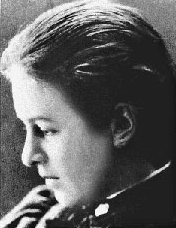
Photoevelyn3

THE SIX ENNEADS of Plotinus – First Tractate

THE SIX ENNEADS

by Plotinus

FIRST TRACTATE.

THE ANIMATE AND THE MAN.

1. Pleasure and distress, fear and courage, desire and aversion, where have these affections and experiences their seat?
Clearly, either in the Soul alone, or in the Soul as employing the body, or in some third entity deriving from both. And for this third entity, again, there are two possible modes: it might be either a blend or a distinct form due to the blending.
And what applies to the affections applies also to whatsoever acts, physical or mental, spring from them.
We have, therefore, to examine discursive-reason and the ordinary mental action upon objects of sense, and enquire whether these have the one seat with the affections and exper-iences, or perhaps sometimes the one seat, sometimes another.
And we must consider also our acts of Intellection, their mode and their seat.
And this very examining principle, which investigates and decides in these matters, must be brought to light.
Firstly, what is the seat of Sense-Perception? This is the obvious beginning since the affections and experiences either are sensations of some kind or at least never occur apart from sensation.

2. This first enquiry obliges us to consider at the outset the nature of the Soul — that is whether a distinction is to be made between Soul and Essential Soul [between an individual Soul and the Soul-Kind in itself.
If such a distinction holds, then the Soul [in man] is some sort of a composite and at once we may agree that it is a recipient and — if only reason allows — that all the affections and experiences really have their seat in the Soul, and with the affections every state and mood, good and bad alike.
But if Soul [in man] and Essential Soul are one and the same, then the Soul will be an Ideal-Form unreceptive of all those activities which it imparts to another Kind but possessing within itself that native Act of its own which Reason manifests.
If this be so, then, indeed, we may think of the Soul as an immortal — if the immortal, the imperishable, must be impassive, giving out something of itself but itself taking nothing from without except for what it receives from the Existents prior to itself from which Exist-ents, in that they are the nobler, it cannot be sundered.
Now what could bring fear to a nature thus unreceptive of all the outer? Fear demands feeling. Nor is there place for courage: courage implies the presence of danger. And suchdesires as are satisfied by the filling or voiding of the body, must be proper to something very different from the Soul, to that only which admits of replenishment and voidance.
And how could the Soul lend itself to any admixture? An essential is not mixed. Or of the intrusion of anything alien? If it did, it would be seeking the destruction of its own nature. Pain must be equally far from it. And Grief — how or for what could it grieve? Whatever possesses Existence is supremely free, dwelling, unchangeable, within its own peculiar nature. And can any increase bring joy, where nothing, not even anything good, can accrue? What such an Existent is, it is unchangeably.
Thus assuredly Sense-Perception, Discursive-Reasoning; and all our ordinary mentation are foreign to the Soul: for sensation is a receiving — whether of an Ideal-Form or of an impassive body — and reasoning and all ordinary mental action deal with sensation.
The question still remains to be examined in the matter of the intellections — whether these are to be assigned to the Soul — and as to Pure-Pleasure, whether this belongs to the Soul in its solitary state.

3. We may treat of the Soul as in the body — whether it be set above it or actually within it — since the association of the two constitutes the one thing called the living organ-ism, the Animate.
Now from this relation, from the Soul using the body as an instrument, it does not follow that the Soul must share the body’s experiences: a man does not himself feel all the experiences of the tools with which he is working.
It may be objected that the Soul must however, have Sense-Perception since its use of its instrument must acquaint it with the external conditions, and such knowledge comes by way of sense. Thus, it will be argued, the eyes are the instrument of seeing, and seeing may bring distress to the soul: hence the Soul may feel sorrow and pain and every other affection that belongs to the body; and from this again will spring desire, the Soul seeking the mending of its instrument.
But, we ask, how, possibly, can these affections pass from body to Soul? Body may communicate qualities or conditions to another body: but — body to Soul? Something happens to A; does that make it happen to B? As long as we have agent and instrument, there are two distinct entities; if the Soul uses the body it is separate from it.
But apart from the philosophical separation how does Soul stand to body?
Clearly there is a combination. And for this several modes are possible. There might be a complete coalescence: Soul might be interwoven through the body: or it might be an Ideal-Form detached or an Ideal-Form in governing contact like a pilot: or there might be part of the Soul detached and another part in contact, the disjoined part being the agent or user, the conjoined part ranking with the instrument or thing used.
In this last case it will be the double task of philosophy to direct this lower Soul towards the higher, the agent, and except in so far as the conjunction is absolutely necessary, to severthe agent from the instrument, the body, so that it need not forever have its Act upon or through this inferior.

4. Let us consider, then, the hypothesis of a coalescence.
Now if there is a coalescence, the lower is ennobled, the nobler degraded; the body is raised in the scale of being as made participant in life; the Soul, as associated with death and unreason, is brought lower. How can a lessening of the life-quality produce an increase such as Sense-Perception?
No: the body has acquired life, it is the body that will acquire, with life, sensation and the affections coming by sensation. Desire, then, will belong to the body, as the objects of desire are to be enjoyed by the body. And fear, too, will belong to the body alone; for it is the body’s doom to fail of its joys and to perish.
Then again we should have to examine how such a coalescence could be conceived: we might find it impossible: perhaps all this is like announcing the coalescence of things utterly incongruous in kind, let us say of a line and whiteness.
Next for the suggestion that the Soul is interwoven through the body: such a relation would not give woof and warp community of sensation: the interwoven element might very well suffer no change: the permeating soul might remain entirely untouched by what affects the body — as light goes always free of all it floods — and all the more so, since, precisely, we are asked to consider it as diffused throughout the entire frame.
Under such an interweaving, then, the Soul would not be subjected to the body’s affec-tions and experiences: it would be present rather as Ideal-Form in Matter. Let us then suppose Soul to be in body as Ideal-Form in Matter.
Now if — the first possibility — the Soul is an essence, a self-existent, it can be present only as separable form and will therefore all the more decidedly be the Using-Principle [and therefore unaffected].
Suppose, next, the Soul to be present like axe-form on iron: here, no doubt, the form is all important but it is still the axe, the complement of iron and form, that effects whatever is effected by the iron thus modified: on this analogy, therefore, we are even more strictly compelled to assign all the experiences of the combination to the body: their natural seat is the material member, the instrument, the potential recipient of life.
Compare the passage where we read2 that “it is absurd to suppose that the Soul weaves”; equally absurd to think of it as desiring, grieving. All this is rather in the province of some-thing which we may call the Animate.

5. Now this Animate might be merely the body as having life: it might be the Couplement of Soul and body: it might be a third and different entity formed from both.
The Soul in turn — apart from the nature of the Animate — must be either impassive, merely causing Sense-Perception in its yoke-fellow, or sympathetic; and, if sympathetic, it may have identical experiences with its fellow or merely correspondent experiences: desire for example in the Animate may be something quite distinct from the accompanying movement or state in the desiring faculty.
The body, the live-body as we know it, we will consider later.
Let us take first the Couplement of body and Soul. How could suffering, for example, be seated in this Couplement?
It may be suggested that some unwelcome state of the body produces a distress which reaches to a Sensitive-Faculty which in turn merges into Soul. But this account still leaves the origin of the sensation unexplained.
Another suggestion might be that all is due to an opinion or judgement: some evil seems to have befallen the man or his belongings and this conviction sets up a state of trouble in the body and in the entire Animate. But this account leaves still a question as to the source and seat of the judgement: does it belong to the Soul or to the Couplement? Besides, the judgement that evil is present does not involve the feeling of grief: the judgement might very well arise and the grief by no means follow: one may think oneself slighted and yet not be angry; and the appetite is not necessarily excited by the thought of a pleasure. We are, thus, no nearer than before to any warrant for assigning these affections to the Couplement.
Is it any explanation to say that desire is vested in a Faculty-of-desire and anger in the Irascible-Faculty and, collectively, that all tendency is seated in the Appetitive-Faculty? Such a statement of the facts does not help towards making the affections common to the Couplement; they might still be seated either in the Soul alone or in the body alone. On the one hand if the appetite is to be stirred, as in the carnal passion, there must be a heating of the blood and the bile, a well-defined state of the body; on the other hand, the impulse to-wards The Good cannot be a joint affection, but, like certain others too, it would belong necessarily to the Soul alone.
Reason, then, does not permit us to assign all the affections to the Couplement.
In the case of carnal desire, it will certainly be the Man that desires, and yet, on the other hand, there must be desire in the Desiring-Faculty as well. How can this be? Are we to suppose that, when the man originates the desire, the Desiring-Faculty moves to the order? How could the Man have come to desire at all unless through a prior activity in the Desiring-Faculty? Then it is the Desiring-Faculty that takes the lead? Yet how, unless the body be first in the appropriate condition?

6. It may seem reasonable to lay down as a law that when any powers are contained by a recipient, every action or state expressive of them must be the action or state of that recip-ient, they themselves remaining unaffected as merely furnishing efficiency.
But if this were so, then, since the Animate is the recipient of the Causing-Principle [i.e., the Soul] which brings life to the Couplement, this Cause must itself remain unaffected, all the experiences and expressive activities of the life being vested in the recipient, the Animate.
But this would mean that life itself belongs not to the Soul but to the Couplement; or at least the life of the Couplement would not be the life of the Soul; Sense-Perception would belong not to the Sensitive-Faculty but to the container of the faculty.
But if sensation is a movement traversing the body and culminating in Soul, how the soul lack sensation? The very presence of the Sensitive-Faculty must assure sensation to the Soul.
Once again, where is Sense-Perception seated?
In the Couplement. Yet how can the Couplement have sensation independently of action in the Sensitive-Faculty, the Soul left out of count and the Soul-Faculty?

7. The truth lies in the Consideration that the Couplement subsists by virtue of the Soul’s presence.
This, however, is not to say that the Soul gives itself as it is in itself to form either the Couplement or the body.
No; from the organized body and something else, let us say a light, which the Soul gives forth from itself, it forms a distinct Principle, the Animate; and in this Principle are vested Sense-Perception and all the other experiences found to belong to the Animate.
But the “We”? How have We Sense-Perception?
By the fact that We are not separate from the Animate so constituted, even though certainly other and nobler elements go to make up the entire many-sided nature of Man.
The faculty of perception in the Soul cannot act by the immediate grasping of sensible objects, but only by the discerning of impressions printed upon the Animate by sensation: these impressions are already Intelligibles while the outer sensation is a mere phantom of the other [of that in the Soul] which is nearer to Authentic-Existence as being an impassive reading of Ideal-Forms.
And by means of these Ideal-Forms, by which the Soul wields single lordship over the Animate, we have Discursive-Reasoning, Sense-Knowledge and Intellection. From this moment we have peculiarly the We: before this there was only the “Ours”; but at this stage stands the WE [the authentic Human-Principle] loftily presiding over the Animate.
There is no reason why the entire compound entity should not be described as the Animate or Living-Being — mingled in a lower phase, but above that point the beginning of the veritable man, distinct from all that is kin to the lion, all that is of the order of the multiple brute. And since The Man, so understood, is essentially the associate of the reasoning Soul,in our reasoning it is this “We” that reasons, in that the use and act of reason is a characteristic Act of the Soul.

8. And towards the Intellectual-Principle what is our relation? By this I mean, not that faculty in the soul which is one of the emanations from the Intellectual-Principle, but The Intellectual-Principle itself [Divine-Mind].
This also we possess as the summit of our being. And we have It either as common to all or as our own immediate possession: or again we may possess It in both degrees, that is in common, since It is indivisible — one, everywhere and always Its entire self — and severally in that each personality possesses It entire in the First-Soul [i.e. in the Intellectual as distin-guished from the lower phase of the Soul].
Hence we possess the Ideal-Forms also after two modes: in the Soul, as it were unrolled and separate; in the Intellectual-Principle, concentrated, one.
And how do we possess the Divinity?
In that the Divinity is contained in the Intellectual-Principle and Authentic-Existence; and We come third in order after these two, for the We is constituted by a union of the su-preme, the undivided Soul — we read — and that Soul which is divided among [living] bodies. For, note, we inevitably think of the Soul, though one undivided in the All, as being present to bodies in division: in so far as any bodies are Animates, the Soul has given itself to each of the separate material masses; or rather it appears to be present in the bodies by the fact that it shines into them: it makes them living beings not by merging into body but by giving forth, without any change in itself, images or likenesses of itself like one face caught by many mirrors.
The first of these images is Sense-Perception seated in the Couplement; and from this downwards all the successive images are to be recognized as phases of the Soul in lessening succession from one another, until the series ends in the faculties of generation and growth and of all production of offspring — offspring efficient in its turn, in contradistinction to the engendering Soul which [has no direct action within matter but] produces by mere in-clination towards what it fashions.

9. That Soul, then, in us, will in its nature stand apart from all that can cause any of the evils which man does or suffers; for all such evil, as we have seen, belongs only to the Animate, the Couplement. But there is a difficulty in understanding how the Soul can go guiltless if our mentation and reasoning are vested in it: for all this lower kind of knowledge is delusion and is the cause of much of what is evil.
When we have done evil it is because we have been worsted by our baser side — for a man is many — by desire or rage or some evil image: the misnamed reasoning that takes up with the false, in reality fancy, has not stayed for the judgement of the Reasoning-Principle: we have acted at the call of the less worthy, just as in matters of the sense-sphere we some-times see falsely because we credit only the lower perception, that of the Couplement, without applying the tests of the Reasoning-Faculty.
The Intellectual-Principle has held aloof from the act and so is guiltless; or, as we may state it, all depends on whether we ourselves have or have not put ourselves in touch with the Intellectual-Realm either in the Intellectual-Principle or within ourselves; for it is possible at once to possess and not to use.
Thus we have marked off what belongs to the Couplement from what stands by itself: the one group has the character of body and never exists apart from body, while all that has no need of body for its manifestation belongs peculiarly to Soul: and the Understanding, as passing judgement upon Sense-Impressions, is at the point of the vision of Ideal-Forms, seeing them as it were with an answering sensation (i.e., with consciousness) this last is at any rate true of the Understanding in the Veritable Soul. For Understanding, the true, is the Act of the Intellections: in many of its manifestations it is the assimilation and reconcili-ation of the outer to the inner.
Thus in spite of all, the Soul is at peace as to itself and within itself: all the changes and all the turmoil we experience are the issue of what is subjoined to the Soul, and are, as have said, the states and experiences of this elusive “Couplement.”

10. It will be objected, that if the Soul constitutes the We [the personality] and We are subject to these states then the Soul must be subject to them, and similarly that what We do must be done by the Soul.
But it has been observed that the Couplement, too — especially before our emancipation — is a member of this total We, and in fact what the body experiences we say We experience. This then covers two distinct notions; sometimes it includes the brute-part, sometimes it transcends the brute. The body is brute touched to life; the true man is the other, going pure of the body, natively endowed with the virtues which belong to the Intellectual-Activity, virtues whose seat is the Separate Soul, the Soul which even in its dwelling here may be kept apart. [This Soul constitutes the human being] for when it has wholly withdrawn, that other Soul which is a radiation [or emanation] from it withdraws also, drawn after it.
Those virtues, on the other hand, which spring not from contemplative wisdom but from custom or practical discipline belong to the Couplement: to the Couplement, too, belong the vices; they are its repugnances, desires, sympathies.
And Friendship?
This emotion belongs sometimes to the lower part, sometimes to the interior man.

11. In childhood the main activity is in the Couplement and there is but little irradiation from the higher principles of our being: but when these higher principles act but feebly or rarely upon us their action is directed towards the Supreme; they work upon us only when they stand at the mid-point.
But does not the include that phase of our being which stands above the mid-point?
It does, but on condition that we lay hold of it: our entire nature is not ours at all times but only as we direct the mid-point upwards or downwards, or lead some particular phase of our nature from potentiality or native character into act.
And the animals, in what way or degree do they possess the Animate?
If there be in them, as the opinion goes, human Souls that have sinned, then the Anim-ating-Principle in its separable phase does not enter directly into the brute; it is there but not there to them; they are aware only of the image of the Soul [only of the lower Soul] and of that only by being aware of the body organised and determined by that image.
If there be no human Soul in them, the Animate is constituted for them by a radiation from the All-Soul.

12. But if Soul is sinless, how come the expiations? Here surely is a contradiction; on the one side the Soul is above all guilt; on the other, we hear of its sin, its purification, its expiation; it is doomed to the lower world, it passes from body to body.
We may take either view at will: they are easily reconciled.
When we tell of the sinless Soul, we make Soul and Essential-Soul one and the same: it is the simple unbroken Unity.
By the Soul subject to sin we indicate a groupment, we include that other, that phase of the Soul which knows all the states and passions: the Soul in this sense is compound, all-inclusive: it falls under the conditions of the entire living experience: this compound it is that sins; it is this, and not the other, that pays penalty.
It is in this sense that we read of the Soul: “We saw it as those others saw the sea-god Glaukos.” “And,” reading on, “if we mean to discern the nature of the Soul we must strip it free of all that has gathered about it, must see into the philosophy of it, examine with what Existences it has touch and by kinship to what Existences it is what it is.”
Thus the Life is one thing, the Act is another and the Expiator yet another. The retreat and sundering, then, must be not from this body only, but from every alien accruement. Such accruement takes place at birth; or rather birth is the coming-into-being of that other [lower] phase of the Soul. For the meaning of birth has been indicated elsewhere; it is brought about by a descent of the Soul, something being given off by the Soul other than that actually coming down in the declension.
Then the Soul has let this image fall? And this declension is it not certainly sin?
If the declension is no more than the illuminating of an object beneath, it constitutes no sin: the shadow is to be attributed not to the luminary but to the object illuminated; if the object were not there, the light could cause no shadow.
And the Soul is said to go down, to decline, only in that the object it illuminates lives by its life. And it lets the image fall only if there be nothing near to take it up; and it lets it fall, not as a thing cut off, but as a thing that ceases to be: the image has no further being when the whole Soul is looking toward the Supreme.
The poet, too, in the story of Hercules, seems to give this image separate existence; he puts the shade of Hercules in the lower world and Hercules himself among the gods: treating the hero as existing in the two realms at once, he gives us a twofold Hercules.
It is not difficult to explain this distinction. Hercules was a hero of practical virtue. By his noble serviceableness he was worthy to be a God. On the other hand, his merit was action and not the Contemplation which would place him unreservedly in the higher realm. Therefore while he has place above, something of him remains below.

13. And the principle that reasons out these matters? Is it We or the Soul?
We, but by the Soul.
But how “by the Soul”? Does this mean that the Soul reasons by possession [by contact with the matters of enquiry]?
No; by the fact of being Soul. Its Act subsists without movement; or any movement that can be ascribed to it must be utterly distinct from all corporal movement and be simply the Soul’s own life.
And Intellection in us is twofold: since the Soul is intellective, and Intellection is the highest phase of life, we have Intellection both by the characteristic Act of our Soul and by the Act of the Intellectual-Principle upon us — for this Intellectual-Principle is part of us no less than the Soul, and towards it we are ever rising.

(Plotinus (/plɒˈtaɪnəs/; Greek: Πλωτῖνος; c. 204/5 – 270) was a major philosopher of the ancient world. In his philosophy there are three principles: the One, the Intellect, and the Soul. His teacher was Ammonius Saccas and he is of the Platonic tradition. Historians of the 19th century invented the term Neoplatonism and applied it to him and his philosophy which was influential in Late Antiquity. Much of the biographical information about Plotinus comes from Porphyry’s preface to his edition of Plotinus’ Enneads. His metaphysical writings have inspired centuries of Pagan, Christian, Jewish, Islamic and Gnostic metaphysicians and mystics.)
plotinus

Mysticism: A Study in the Nature and Development of Spiritual Consciousness (ESSENTIAL READING!)

Part 1: The Mystic Fact
Chapter 1: The Point of Departure

The most highly developed branches of the human family have in common one peculiar characteristic. They tend to produce — sporadically it is true, and often in the teeth of adverse external circumstances — a curious and definite type of personality; a type which refuses to be satisfied with that which other men call experience, and is inclined, in the words of its enemies, to “deny the world in order that it may find reality.” We meet these persons in the east and the west; in the ancient, mediaeval, and modern worlds. Their one passion appears to be the prosecution of a certain spiritual and intangible quest: the finding of a “way out” or a “way back” to some desirable state in which alone they can satisfy their craving for absolute truth. This quest, for them, has constituted the whole meaning of life. They have made for it without effort sacrifices which have appeared enormous to other men: and it is an indirect testimony to its objective actuality, that whatever the place or period in which they have arisen, their aims, doctrines and methods have been substantially the same. Their experience, therefore, forms a body of evidence, curiously self-consistent and often mutually explanatory, which must be taken into account before we can add up the sum of the energies and potentialities of the human spirit, or reasonably speculate on its relations to the unknown world which lies outside the boundaries of sense.
All men, at one time or another, have fallen in love with the veiled Isis whom they call Truth. With most, this has been a passing passion: they have early seen its hopelessness and turned to more practical things. But others remain all their lives the devout lovers of reality: though the manner of their love, the vision which they make to themselves of the beloved object varies enormously. Some see Truth as Dante saw Beatrice: an adorable yet intangible figure, found in this world yet revealing the next. To others she seems rather an evil but an irresistible enchantress: enticing, demanding payment and betraying her lover at the last. Some have seen her in a test tube, and some in a poet’s dream: some before the altar, others in the slime. The extreme pragmatists have even sought her in the kitchen; declaring that she may best be recognized by her utility. Last stage of all, the philosophic sceptic has comforted an unsuccessful courtship by assuring himself that his mistress is not really there.
Under whatsoever symbols they have objectified their quest, none of these seekers have ever been able to assure the world that they have found, seen face to face, the Reality behind the veil. But if we may trust the reports of the mystics — and they are reports given with a strange accent of certainty and good faith — they have succeeded where all these others have failed, in establishing immediate communication between the spirit of man, entangled as they declare amongst material things, and that “only Reality,” that immaterial and final Being, which some philosophers call the Absolute, and most theologians call God. This, they say — and here many who are not mystics agree with them — is the hidden Truth which is the object of man’s craving; the only satisfying goal of his quest. Hence, they should claim from us the same attention that we give to other explorers of countries in which we are not competent to adventure ourselves; for the mystics are the pioneers of the spiritual world, and we have no right to deny validity to their discoveries, merely because we lack the opportunity or the courage necessary to those who would prosecute such explorations for themselves.
It is the object of this book to attempt a description, and also — though this is needless for those who read that description in good faith — a justification of these experiences and the conclusions which have been drawn from them. So remote, however, are these matters from our ordinary habits of thought, that their investigation entails, in those who would attempt to understand them, a definite preparation: a purging of the intellect. As with those who came of old to the Mysteries, purification is here the gate of knowledge. We must come to this encounter with minds cleared of prejudice and convention, must deliberately break with our inveterate habit of taking the “visible world” for granted; our lazy assumption that somehow science is “real” and metaphysics is not. We must pull down our own card houses — descend, as the mystics say, “into our nothingness” — and examine for ourselves the foundations of all possible human experience, before we are in a position to criticize the buildings of the visionaries, the poets, and the saints. We must not begin to talk of the unreal world of these dreamers until we have discovered — if we can — a real world with which it may be compared.
Such a criticism of reality is of course the business of philosophy. I need hardly say that this book is not written by a philosopher, nor is it addressed to students of that imperial science. Nevertheless, amateurs though we be, we cannot reach our starting-point without trespassing to some extent on philosophic ground. That ground covers the whole area of first principles: and it is to first principles that we must go, if we would understand the true significance of the mystic type.
Let us then begin at the beginning: and remind ourselves of a few of the trite and primary facts which all practical persons agree to ignore. That beginning, for human thought, is of course the I, the Ego, the self-conscious subject which is writing this book, or the other self-conscious subject which is reading it; and which declares, in the teeth of all arguments, I AM. Here is a point as to which we all feel quite sure. No metaphysician has yet shaken the ordinary individual’s belief in his own existence. The uncertainties only begin for most of us when we ask what else is.
To this I, this conscious self “imprisoned in the body like an oyster in his shell,” come, as we know, a constant stream of messages and experiences. Chief amongst these are the stimulation of the tactile nerves whose result we call touch, the vibrations taken up by the optic nerve which we call light, and those taken up by the ear and perceived as sound.
What do these experiences mean? The first answer of the unsophisticated Self is, that they indicate the nature of the external world: it is to the “evidence of her senses” that she turns, when she is asked what the world is like. From the messages received through those senses, which pour in on her whether she will or no, battering upon her gateways at every instant and from every side, she constructs that “sense-world” which is the “real and solid world” of normal men. As the impressions come in — or rather those interpretations of the original impressions which her nervous system supplies — she pounces on them, much as players in the spelling game pounce on the separate letters dealt out to them. She sorts, accepts, rejects, combines: and then triumphantly produces from them a “concept” which is, she says, the external world. With an enviable and amazing simplicity she attributes her own sensations to the unknown universe. The stars, she says, are bright; the grass is green. For her, as for the philosopher Hume, “reality consists in impressions and ideas.”
It is immediately apparent, however, that this sense-world, this seemingly real external universe — though it may be useful and valid in other respects — cannot be the external world, but only the Self’s projected picture of it. It is a work of art, not a scientific fact; and, whilst it may well possess the profound significance proper to great works of art, is dangerous if treated as a subject of analysis. Very slight investigation shows that it is a picture whose relation to reality is at best symbolic and approximate, and which would have no meaning for selves whose senses, or channels of communication, happened to be arranged upon a different plan. The evidence of the senses, then, cannot be accepted as evidence of the nature of ultimate reality: useful servants, they are dangerous guides. Nor can their testimony disconcert those seekers whose reports they appear to contradict.
The conscious self sits, so to speak, at the receiving end of a telegraph wire. On any other theory than that of mysticism, it is her one channel of communication with the hypothetical “external world.” The receiving instrument registers certain messages. She does not know, and — so long as she remains dependent on that instrument — never can know, the object, the reality at the other end of the wire, by which those messages are sent; neither can the messages truly disclose the nature of that object. But she is justified on the whole in accepting them as evidence that something exists beyond herself and her receiving instrument. It is obvious that the structural peculiarities of the telegraphic instrument will have exerted a modifying effect upon the message. That which is conveyed as dash and dot, colour and shape, may have been received in a very different form. Therefore this message, though it may in a partial sense be relevant to the supposed reality at the other end, can never be adequate to it. There will be fine vibrations which it fails to take up, others which it confuses together. Hence a portion of the message is always lost; or, in other language, there are aspects of the world which we can never know.
The sphere of our possible intellectual knowledge is thus strictly conditioned by the limits of our own personality. On this basis, not the ends of the earth, but the external termini of our own sensory nerves, are the termini of our explorations: and to “know oneself” is really to know one’s universe. We are locked up with our receiving instruments: we cannot get up and walk away in the hope of seeing whither the lines lead. Eckhart’s words are still final for us: “the soul can only approach created things by the voluntary reception of images.” Did some mischievous Demiurge choose to tickle our sensory apparatus in a new way, we should receive by this act a new universe.
William James once suggested as a useful exercise for young idealists, a consideration of the changes which would be worked in our ordinary world if the various branches of our receiving instruments exchanged duties; if, for instance, we heard all colours and saw all sounds. Such a remark throws a sudden light on the strange and apparently insane statement of the visionary Saint-Martin, “I heard flowers that sounded, and saw notes that shone”; and on the reports of other mystics concerning a rare moment of consciousness in which the senses are fused into a single and ineffable act of perception, and colour and sound are known as aspects of one thing.
Since music is but an interpretation of certain vibrations undertaken by the ear, and colour an interpretation of other vibrations performed by the eye, this is less mad than it sounds and may yet be brought within the radius of physical science. Did such an alteration of our senses take place the world would still send us the same messages — that strange unknown world from which, on this hypothesis, we are hermetically sealed — but we should interpret them differently. Beauty would still be ours, though speaking another tongue. The bird’s song would then strike our retina as a pageant of colour: we should see the magical tones of the wind, hear as a great fugue the repeated and harmonized greens of the forest, the cadences of stormy skies. Did we realize how slight an adjustment of our organs is needed to initiate us into such a world, we should perhaps be less contemptuous of those mystics who tell us that they apprehended the Absolute as “heavenly music” or “Uncreated Light”: less fanatical in our determination to make the solid “world of common sense” the only standard of reality. This “world of common sense” is a conceptual world. It may represent an external universe: it certainly does represent the activity of the human mind. Within that mind it is built up: and there most of us are content “at ease for aye to dwell,” like the soul in the Palace of Art.
A direct encounter with absolute truth, then, appears to be impossible for normal non-mystical consciousness. We cannot know the reality, or even prove the existence, of the simplest object: though this is a limitation which few people realize acutely and most would deny. But there persists in the race a type of personality which does realize this limitation: and cannot be content with the sham realities that furnish the universe of normal men. It is necessary, as it seems, to the comfort of persons of this type to form for themselves some image of the Something or Nothing which is at the end of their telegraph lines: some “conception of being,” some “theory of knowledge.” They are tormented by the Unknowable, ache for first principles, demand some background to the shadow show of things. In so far as man possesses this temperament, he hungers for reality, and must satisfy that hunger as best he can: staving off starvation, though he many not be filled.
It is doubtful whether any two selves have offered themselves exactly the same image of the truth outside their gates: for a living metaphysic, like a living religion, is at bottom a strictly personal affair — a matter, as William James reminded us, of vision rather than of argument. Nevertheless such a living metaphysic may — and if sound generally does — escape the stigma of subjectivism by outwardly attaching itself to a traditional School; as personal religion may and should outwardly attach itself to a traditional church. Let us then consider shortly the results arrived at by these traditional schools — the great classic theories concerning the nature of reality. In them we see crystallized the best that the human intellect, left to itself, has been able to achieve.
I. The most obvious and generally accepted explanation of the world is of course that of Naturalism, or naive Realism: the point of view of the plain man. Naturalism states simply that we see the real world, though we may not see it very well. What seems to normal healthy people to be there, is approximately there. It congratulates itself on resting in the concrete; it accepts material things as real. In other words, our corrected and correlated sense impressions, raised to their highest point of efficiency, form for it the only valid material of knowledge: knowledge itself being the classified results of exact observation.
Such an attitude as this may be a counsel of prudence, in view of our ignorance of all that lies beyond: but it can never satisfy our hunger for reality. It says in effect, “The room in which we find ourselves is fairly comfortable. Draw the curtains, for the night is dark: and let us devote ourselves to describing the furniture.” Unfortunately, however, even the furniture refuses to accommodate itself to the naturalistic view of things. Once we begin to examine it attentively, we find that it abounds in hints of wonder and mystery: declares aloud that even chairs and tables are not what they seem.
We have seen that the most elementary criticism, applied to any ordinary object of perception, tends to invalidate the simple and comfortable creed of “common sense”; that not merely faith but gross credulity, is needed by the mind which would accept the apparent as the real. I say, for instance, that I “see” a house. I can only mean by this that the part of my receiving instrument which undertakes the duty called vision is affected in a certain way, and arouses in my mind the idea “house.” The idea “house” is now treated by me as a real house, and my further observations will be an unfolding, enriching, and defining of this image. But what the external reality is which evoked the image that I call “house,” I do not know and never can know. It is as mysterious, as far beyond my apprehension, as the constitution of the angelic choirs. Consciousness shrinks in terror from contact with the mighty verb “to be.” I may of course call in one sense to “corroborate,” as we trustfully say, the evidence of the other; may approach the house, and touch it. Then the nerves of my hand will be affected by a sensation which I translate as hardness and solidity; the eye by a peculiar and wholly incomprehensible sensation called redness; and from these purely personal changes my mind constructs and externalizes an idea which it calls red bricks. Science herself, however, if she be asked to verify the reality of these perceptions, at once declares that though the material world be real, the ideas of solidity and colour are but hallucination. They belong to the human animal, not to the physical universe: pertain to accident not substance, as scholastic philosophy would say.
“The red brick,” says Science, “is a mere convention. In reality that bit, like all other bits of the universe, consists, so far as I know at present, of innumerable atoms whirling and dancing one about the other. It is no more solid than a snowstorm. Were you to eat of Alice-in-Wonderland’s mushroom and shrink to the dimensions of the infra-world, each atom with its electrons might seem to you a solar system and the red brick itself a universe. Moreover, these atoms themselves elude me as I try to grasp them. They are only manifestations of something else. Could I track matter to its lair, I might conceivably discover that it has no extension, and become an idealist in spite of myself. As for redness, as you call it, that is a question of the relation between your optic nerve and the light waves which it is unable to absorb. This evening, when the sun slopes, your brick will probably be purple, a very little deviation from normal vision on your part would make it green. Even the sense that the object of perception is outside yourself may be fancy; since you as easily attribute this external quality to images seen in dreams, and to waking hallucinations, as you do to those objects which, as you absurdly say, are ‘really there.’”
Further, there is no trustworthy standard by which we can separate the “real” from the “unreal” aspects of phenomena. Such standards as exist are conventional: and correspond to convenience, not to truth. It is no argument to say that most men see the world in much the same way, and that this “way” is the true standard of reality: though for practical purposes we have agreed that sanity consists in sharing the hallucinations of our neighbours. Those who are honest with themselves know that this “sharing” is at best incomplete. By the voluntary adoption of a new conception of the universe, the fitting of a new alphabet to the old Morse code — a proceeding which we call the acquirement of knowledge — we can and do change to a marked extent our way of seeing things: building up new worlds from old sense impressions, and transmuting objects more easily and thoroughly than any magician. “Eyes and ears,” said Heracleitus, “are bad witnesses to those who have barbarian souls”: and even those whose souls are civilized tend to see and hear all things through a temperament. In one and the same sky the poet may discover the habitation of angels, whilst the sailor sees only a promise of dirty weather ahead. Hence, artist and surgeon, Christian and rationalist, pessimist and optimist, do actually and truly live in different and mutually exclusive worlds, not only of thought but also of perception. Only the happy circumstance that our ordinary speech is conventional, not realistic, permits us to conceal from one another the unique and lonely world in which each lives. Now and then an artist is born, terribly articulate, foolishly truthful, who insists on “Speaking as he saw.” Then other men, lapped warmly in their artificial universe, agree that he is mad: or, at the very best, an “extraordinarily imaginative fellow.”
Moreover, even this unique world of the individual is not permanent. Each of us, as we grow and change, works incessantly and involuntarily at the re-making of our sensual universe. We behold at any specific moment not “that which is,” but “that which we are”, and personality undergoes many readjustments in the course of its passage from birth through maturity to death. The mind which seeks the Real, then, in this shifting and subjective “natural” world is of necessity thrown back on itself: on images and concepts which owe more to the “seer” than to the “seen.” But Reality must be real for all, once they have found it: must exist “in itself” upon a plane of being unconditioned by the perceiving mind. Only thus can it satisfy that mind’s most vital instinct, most sacred passion — its “instinct for the Absolute,” its passion for truth.
You are not asked, as a result of these antique and elementary propositions, to wipe clean the slate of normal human experience, and cast in your lot with intellectual nihilism. You are only asked to acknowledge that it is but a slate, and that the white scratches upon it which the ordinary man calls facts, and the Scientific Realist calls knowledge, are at best relative and conventionalized symbols of that aspect of the unknowable reality at which they hint. This being so, whilst we must all draw a picture of some kind on our slate and act in relation therewith, we cannot deny the validity — though we may deny the usefulness — of the pictures which others produce, however abnormal and impossible they may seem; since these are sketching an aspect of reality which has not come within our sensual field, and so does not and cannot form part of our world. Yet as the theologian claims that the doctrine of the Trinity veils and reveals not Three but One, so the varied aspects under which the universe appears to the perceiving consciousness hint at a final reality, or in Kantian language, a Transcendental Object, which shall be, not any one, yet all of its manifestations; transcending yet including the innumerable fragmentary worlds of individual conception. We begin, then, to ask what can be the nature of this One; and whence comes the persistent instinct which — receiving no encouragement from sense experience — apprehends and desires this unknown unity, this all-inclusive Absolute, as the only possible satisfaction of its thirst for truth.
2. The second great conception of Being — Idealism — has arrived by a process of elimination at a tentative answer to this question. It whisks us far from the material universe, with its interesting array of “things,” its machinery, its law, into the pure, if thin, air of a metaphysical world. Whilst the naturalist’s world is constructed from an observation of the evidence offered by the senses, the Idealist’s world is constructed from an observation of the processes of thought. There are but two things, he says in effect, about which we are sure: the existence of a thinking subject, a conscious Self, and of an object, an Idea, with which that subject deals. We know, that is to say, both Mind and Thought. What we call the universe is really a collection of such thoughts; and these, we agree, have been more or less distorted by the subject, the individual thinker, in the process of assimilation. Obviously, we do not think all that there is to be thought, conceive all that there is to be conceived; neither do we necessarily combine in right order and proportion those ideas which we are capable of grasping. Reality, says Objective Idealism, is the complete, undistorted Object, the big thought, of which we pick up these fragmentary hints: the world of phenomena which we treat as real being merely its shadow show or “manifestation in space and time.”
According to the form of Objective Idealism here chosen from amongst many as typical — for almost every Idealist has his own scheme of metaphysical salvation — we live in a universe which is, in popular language, the Idea, or Dream of its Creator. We, as Tweedledum explained to Alice in the most philosophic of all fairy tales, are “just part of the dream.” All life, all phenomena, are the endless modifications and expressions of the one transcendent Object, the mighty and dynamic Thought of one Absolute Thinker, in which we are bathed. This Object, or certain aspects of it — and the place of each individual consciousness within the Cosmic Thought, or, as we say, our position in life, largely determines which these aspects shall be — is interpreted by the senses and conceived by the mind, under limitations which we are accustomed to call matter, space and time. But we have no reason to suppose that matter, space, and time are necessarily parts of reality; of the ultimate Idea. Probability points rather to their being the pencil and paper with which we sketch it. As our vision, our idea of things, tends to approximate more and more to that of the Eternal Idea, so we get nearer and nearer to reality: for the idealist’s reality is simply the Idea, or Thought of God. This, he says, is the supreme unity at which all the illusory appearances that make up the widely differing worlds of “common sense,” of science, of metaphysics, and of art dimly hint. This is the sense in which it can truly be said that only the supernatural possesses reality; for that world of appearance which we call natural is certainly largely made up of preconception and illusion, of the hints offered by the eternal real world of Idea outside our gates, and the quaint concepts which we at our receiving instrument manufacture from them.
There is this to be said for the argument of Idealism: that in the last resort, the destinies of mankind are invariably guided, not by the concrete “facts” of the sense world, but by concepts which are acknowledged by every one to exist only on the mental plane. In the great moments of existence, when he rises to spiritual freedom, these are the things which every man feels to be real. It is by these and for these that he is found willing to live, work, suffer, and die. Love, patriotism, religion, altruism, fame, all belong to the transcendental world. Hence, they partake more of the nature of reality than any “fact” could do; and man, dimly recognizing this, has ever bowed to them as to immortal centres of energy. Religions as a rule are steeped in idealism: Christianity in particular is a trumpet call to an idealistic conception of life, Buddhism is little less. Over and over again, their Scriptures tell us that only materialists will be damned.
In Idealism we have perhaps the most sublime theory of Being which has ever been constructed by the human intellect: a theory so sublime, in fact, that it can hardly have been produced by the exercise of “pure reason” alone, but must be looked upon as a manifestation of that natural mysticism, that instinct for the Absolute, which is latent in man. But, when we ask the idealist how we are to attain communion with the reality which he describes to us as “certainly there,” his system suddenly breaks down; and discloses itself as a diagram of the heavens, not a ladder to the stars. This failure of Idealism to find in practice the reality of which it thinks so much is due, in the opinion of the mystics, to a cause which finds epigrammatic expression in the celebrated phrase by which St. Jerome marked the distinction between religion and philosophy. “Plato located the soul of man in the head; Christ located it in the heart.” That is to say, Idealism, though just in its premises, and often daring and honest in their application, is stultified by the exclusive intellectualism of its own methods: by its fatal trust in the squirrel-work of the industrious brain instead of the piercing vision of the desirous heart. It interests man, but does not involve him in its processes: does not catch him up to the new and more real life which it describes. Hence the thing that matters, the living thing, has somehow escaped it; and its observations bear the same relation to reality as the art of the anatomist does to the mystery of birth.
3. But there is yet another Theory of Being to be considered: that which may be loosely defined as Philosophic Scepticism. This is the attitude of those who refuse to accept either the realistic or the idealistic answer to the eternal question: and, confronted in their turn with the riddle of reality, reply that there is no riddle to solve. We of course assume for the ordinary purposes of life that for every sequence a: b: present in our consciousness there exists a mental or material A: B: in the external universe, and that the first is a strictly relevant, though probably wholly inadequate, expression of the second. The bundle of visual and auditory sensations, for instance, whose sum total I am accustomed to call Mrs. Smith, corresponds with something that exists in the actual as well as in my phenomenal world. Behind my Mrs. Smith, behind the very different Mrs. Smith which the X rays would exhibit, there is, contends the Objective Idealist, a transcendental, or in the Platonic sense an ideal Mrs. Smith, at whose qualities I cannot even guess; but whose existence is quite independent of my apprehension of it. But though we do and must act on this hypothesis, it remains only a hypothesis; and it is one which philosophic scepticism will not let pass.
The external world, say the sceptical schools, is — so far as I know it — a concept present in my mind. If my mind ceased to exist, so far as I know the concept which I call the world would cease to exist too. The one thing which for me indubitably is, the self’s experience, its whole consciousness. Outside this circle of consciousness I have no authority to indulge in guesses as to what may or may not Be. Hence, for me, the Absolute is a meaningless diagram, a superfluous complication of thought: since the mind, wholly cut off from contact with external reality, has no reason to suppose that such a reality exists except in its own ideas. Every effort made by philosophy to go forth in search of it is merely the metaphysical squirrel running round the conceptual cage. In the completion and perfect unfolding of the set of ideas with which our consciousness is furnished, lies the only reality which we can ever hope to know. Far better to stay here and make ourselves at home: only this, for us, truly is.
This purely subjective conception of Being has found representatives in every school of thought: even including by a curious paradox, that of mystical philosophy — its one effective antagonist. Thus Delacroix, after an exhaustive and even sympathetic analysis of St. Teresa’s progress towards union with the Absolute, ends upon the assumption that the God with whom she was united was the content of her own subconscious mind. Such a mysticism is that of a kitten running after its own tail: a different path indeed from that which the great seekers for reality have pursued. The reductio ad absurdum of this doctrine is found in the so-called “philosophy” of New Thought, which begs its disciples to “try quietly to realize that the Infinite is really You.” By its utter denial not merely of a knowable, but of a logically conceivable Transcendent, it drives us in the end to the conclusion of extreme pragmatism; that Truth, for us, is not an immutable reality, but merely that idea which happens to work out as true and useful in any given experience. There is no reality behind appearance; therefore all faiths, all figments with which we people that nothingness are equally true, provided they be comfortable and good to live by.
Logically carried out, this conception of Being would permit each man to regard other men as non-existent except within his own consciousness: the only place where a strict scepticism will allow that anything exists. Even the mind which conceives consciousness exists for us only in our own conception of it; we no more know what we are than we know what we shall be. Man is left a conscious Something in the midst, so far as he knows, of Nothing: with no resources save the exploring of his own consciousness.
Philosophic scepticism is particularly interesting to our present inquiry, because it shows us the position in which “pure reason,” if left to itself, is bound to end. It is utterly logical; and though we may feel it to be absurd, we can never prove it to be so. Those who are temperamentally inclined to credulity may become naturalists, and persuade themselves to believe in the reality of the sense world. Those with a certain instinct for the Absolute may adopt the more reasonable faith of idealism. But the true intellectualist, who concedes nothing to instinct or emotion, is obliged in the end to adopt some form of sceptical philosophy. The horrors of nihilism, in fact, can only be escaped by the exercise of faith, by a trust in man’s innate but strictly irrational instinct for that Real “above all reason, beyond all thought” towards which at its best moments his spirit tends. If the metaphysician be true to his own postulates, he must acknowledge in the end that we are all forced to live, to think, and at last to die, in an unknown and unknowable world: fed arbitrarily and diligently, yet how we know not, by ideas and suggestions whose truth we cannot test but whose pressure we cannot resist. It is not by sight but by faith — faith in a supposed external order which we can never prove to exist, and in the approximate truthfulness and constancy of the vague messages which we receive from it — that ordinary men must live and move. We must put our trust in “laws of nature” which have been devised by the human mind as a convenient epitome of its own observations of phenomena, must, for the purposes of daily life, accept these phenomena at their face value: an act of faith beside which the grossest superstitions of the Neapolitan peasant are hardly noticeable.
The intellectual quest of Reality, then, leads us down one of three blind alleys: (1) To an acceptance of the symbolic world of appearance as the real; (2) to the elaboration of a theory also of necessity symbolic — which, beautiful in itself, cannot help us to attain the Absolute which it describes; (3) to a hopeless but strictly logical skepticism.
In answer to the “Why? Why?” of the bewildered and eternal child in us, philosophy, though always ready to postulate the unknown if she can, is bound to reply only, “Nescio! Nescio!” In spite of all her busy map-making, she cannot reach the goal which she points out to us, cannot explain the curious conditions under which we imagine that we know; cannot even divide with a sure hand the subject and object of thought. Science, whose business is with phenomena and our knowledge of them, though she too is an idealist at heart, has been accustomed to explain that all our ideas and instincts, the pictured world that we take so seriously, the oddly limited and illusory nature of our experience, appear to minister to one great end: the preservation of life, and consequent fulfilment of that highly mystical hypothesis, the Cosmic Idea. Each perception, she assures us, serves a useful purpose in this evolutionary scheme: a scheme, by the way, which has been invented — we know not why — by the human mind, and imposed upon an obedient universe.
By vision, hearing, smell, and touch, says Science, we find our way about, are warned of danger, obtain our food. The male perceives beauty in the female in order that the species may be propagated. It is true that this primitive instinct has given birth to higher and purer emotions; but these too fulfil a social purpose and are not so useless as they seem. Man must eat to live, therefore many foods give us agreeable sensations. If he overeats, he dies; therefore indigestion is an unpleasant pain. Certain facts of which too keen a perception would act detrimentally to the life-force are, for most men, impossible of realization: i.e. , the uncertainty of life, the decay of the body, the vanity of all things under the sun. When we are in good health, we all feel very real, solid, and permanent; and this is of all our illusions the most ridiculous, and also the most obviously useful from the point of view of the efficiency and preservation of the race.
But when we look closer, we see that this brisk generalization does not cover all the ground — not even that little tract of ground of which our senses make us free; indeed, that it is more remarkable for its omissions than for its inclusions. Récéjac has well said that “from the moment in which man is no longer content to devise things useful for his existence under the exclusive action of the will-to-live, the principle of (physical) evolution has been violated.” Nothing can be more certain than that man is not so content. He has been called by utilitarian philosophers a tool-making animal — the highest praise they knew how to bestow. More surely he is a vision-making animal; a creature of perverse and unpractical ideals, dominated by dreams no less than by appetites — dreams which can only be justified upon the theory that he moves towards some other goal than that of physical perfection or intellectual supremacy, is controlled by some higher and more vital reality than that of the determinists. We are driven to the conclusion that if the theory of evolution is to include or explain the facts of artistic and spiritual experience — and it cannot be accepted by any serious thinker if these great tracts of consciousness remain outside its range — it must be rebuilt on a mental rather than a physical basis.
Even the most ordinary human life includes in its range fundamental experiences — violent and unforgettable sensations — forced on us as it were against our will, for which science finds it hard to account. These experiences and sensations, and the hours of exalted emotion which they bring with them — often recognized by us as the greatest, most significant hours of our lives — fulfil no office in relation to her pet “functions of nutrition and reproduction.” It is true that they are far-reaching in their effects on character; but they do little or nothing to assist that character in its struggle for physical life. To the unprejudiced eye many of them seem hopelessly out of place in a universe constructed on strictly physicochemical lines — look almost as though nature, left to herself, tended to contradict her own beautifully logical laws. Their presence, more, the large place which they fill in the human world of appearance, is a puzzling circumstance for deterministic philosophers; who can only escape from the dilemma here presented to them by calling these things illusions, and dignifying their own more manageable illusions with the title of facts.
Amongst the more intractable of these groups of perceptions and experiences are those which we connect with religion, with pain and with beauty. All three, for those selves which are capable of receiving their messages, possess a mysterious authority far in excess of those feelings, arguments, or appearances which they may happen to contradict. All three, were the universe of the naturalists true, would be absurd; all three have ever been treated with the reverence due to vital matters by the best minds of the race.
A. I need not point out the hopelessly irrational character of all great religions: which rest, one and all, on a primary assumption that can never be intellectually demonstrated, much less proved — the assumption that the supra-sensible is somehow important and real, and is intimately connected with the life of man. This fact has been incessantly dwelt upon by their critics, and has provoked many a misplaced exercise of ingenuity on the part of their intelligent friends. Yet religion — emphasizing and pushing to extremes that general dependence on faith which we saw to be an inevitable condition of our lives — is one of the most universal and ineradicable functions of man, and this although it constantly acts detrimentally to the interests of his merely physical existence, opposes “the exclusive action of the will-to-live,” except in so far as that will aspires to eternal life. Strictly utilitarian, almost logical in the savage, religion becomes more and more transcendental with the upward progress of the race. It begins as black magic; it ends as Pure Love. Why did the Cosmic Idea elaborate this religious instinct, if the construction put upon its intentions by the determinists be true?
B. Consider again the whole group of phenomena which are known as “the problem of suffering”: the mental anguish and physical pain which appear to be the inevitable result of the steady operation of “natural law” and its voluntary assistants, the cruelty, greed, and injustice of man. Here, it is true, the naturalist seems at first sight to make a little headway, and can point to some amongst the cruder forms of suffering which are clearly useful to the race: punishing us for past follies, spurring to new efforts, warning against future infringements of “law.” But he forgets the many others which refuse to be resumed under this simple formula: forgets to explain how it is that the Cosmic Idea involves the long torments of the incurable, the tortures of the innocent, the deep anguish of the bereaved, the existence of so many gratuitously agonizing forms of death. He forgets, too, the strange fact that man’s capacity for suffering tends to increase in depth and subtlety with the increase of culture and civilization; ignores the still more mysterious, perhaps most significant circumstance that the highest types have accepted it eagerly and willingly, have found in Pain the grave but kindly teacher of immortal secrets, the conferrer of liberty, even the initiator into amazing joys.
Those who “explain” suffering as the result of nature’s immense fecundity — a by-product of that overcrowding and stress through which the fittest tend to survive — forget that even were this demonstration valid and complete it would leave the real problem untouched. The question is not, whence come those conditions which provoke in the self the experiences called sorrow, anxiety, pain: but, why do these conditions hurt the self? The pain is mental; a little chloroform, and though the conditions continue unabated the suffering is gone. Why does full consciousness always include the mysterious capacity for misery as well as for happiness — a capacity which seems at first sight to invalidate any conception of the Absolute as Beautiful and Good? Why does evolution, as we ascend the ladder of life, foster instead of diminishing the capacity for useless mental anguish, for long, dull torment, bitter grief? Why, when so much lies outside our limited powers of perception, when so many of our own most vital functions are unperceived by consciousness, does suffering of some sort form an integral part of the experience of man? For utilitarian purposes acute discomfort would be quite enough; the Cosmic Idea, as the determinists explain it, did not really need an apparatus which felt all the throes of cancer, the horrors of neurasthenia, the pangs of birth. Still less did it need the torments of impotent sympathy for other people’s irremediable pain the dreadful power of feeling the world’s woe. We are hopelessly over-sensitized for the part science calls us to play.
Pain, however we may look at it, indicates a profound disharmony between the sense-world and the human self. If it is to be vanquished, either the disharmony must be resolved by a deliberate and careful adjustment of the self to the world of sense, or, that self must turn from the sense-world to some other with which it is in tune. Pessimist and optimist here join hands. But whilst the pessimist, resting in appearance, only sees “nature red in tooth and claw” offering him little hope of escape, the optimist thinks that pain and anguish — which may in their lower forms be life’s harsh guides on the path of physical evolution — in their higher and apparently “useless” developments are her leaders and teachers in the upper school of Supra-sensible Reality. He believes that they press the self towards another world, still “natural” for him, though “supernatural” for his antagonist, in which it will be more at home. Watching life, he sees in Pain the complement of Love: and is inclined to call these the wings on which man’s spirit can best take flight towards the Absolute. Hence he can say with A Kempis, “Gloriari in tribulatione non est grave amanti,” and needs not to speak of morbid folly when he sees the Christian saints run eagerly and merrily to the Cross.
He calls suffering the “gymnastic of eternity,” the “terrible initiative caress of God”; recognizing in it a quality for which the disagreeable rearrangement of nerve molecules cannot account. Sometimes, in the excess of his optimism, he puts to the test of practice this theory with all its implications. Refusing to be deluded by the pleasures of the sense world, he accepts instead of avoiding pain, and becomes an ascetic; a puzzling type for the convinced naturalist, who, falling back upon contempt — that favourite resource of the frustrated reason — can only regard him as diseased.
Pain, then, which plunges like a sword through creation, leaving on the one side cringing and degraded animals and on the other side heroes and saints, is one of those facts of universal experience which are peculiarly intractable from the point of view of a merely materialistic philosophy.
C. From this same point of view the existence of music and poetry, the qualities of beauty and of rhythm, the evoked sensations of awe, reverence, and rapture, are almost as difficult to account for. The question why an apparent corrugation of the Earth’s surface, called for convenience’ sake an Alp, coated with congealed water, and perceived by us as a snowy peak, should produce in certain natures acute sensations of ecstasy and adoration, why the skylark’s song should catch us up to heaven, and wonder and mystery speak to us alike in “the little speedwell’s darling blue” and in the cadence of the wind, is a problem that seems to be merely absurd, until it is seen to be insoluble. Here Madam How and Lady Why alike are silent. With all our busy seeking, we have not found the sorting house where loveliness is extracted from the flux of things. We know not why “great” poetry should move us to unspeakable emotion, or a stream of notes, arranged in a peculiar sequence, catch us up to heightened levels of vitality: nor can we guess how a passionate admiration for that which we call “best” in art or letters can possibly contribute to the physical evolution of the race. In spite of many lengthy disquisitions on Esthetics, Beauty’s secret is still her own. A shadowy companion, half seen, half guessed at, she keeps step with the upward march of life: and we receive her message and respond to it, not because we understand it but because we must.
Here it is that we approach that attitude of the self, that point of view, which is loosely and generally called mystical. Here, instead of those broad blind alleys which philosophy showed us, a certain type of mind has always discerned three strait and narrow ways going out towards the Absolute. In religion, in pain, and in beauty — and not only in these, but in many other apparently useless peculiarities of the empirical world and of the perceiving consciousness — these persons insist that they recognize at least the fringe of the real. Down these three paths, as well as by many another secret way, they claim that news comes to the self concerning levels of reality which in their wholeness are inaccessible to the senses: worlds wondrous and immortal, whose existence is not conditioned by the “given” world which those senses report. “Beauty,” said Hegel, who, though he was no mystic, had a touch of that mystical intuition which no philosopher can afford to be without, “is merely the Spiritual making itself known sensuously.” In the good, the beautiful, the true,” says Rudolph Eucken, “we see Reality revealing its personal character. They are parts of a coherent and substantial spiritual world.” Here, some of the veils of that substantial world are stripped off: Reality peeps through and is recognized, dimly or acutely, by the imprisoned self.
Récéjac only develops this idea when he says, “If the mind penetrates deeply into the facts of aesthetics, it will find more and more, that these facts are based upon an ideal identity between the mind itself and things. At a certain point the harmony becomes so complete, and the finality so close that it gives us actual emotion. The Beautiful then becomes the sublime; brief apparition, by which the soul is caught up into the true mystic state, and touches the Absolute. It is scarcely possible to persist in this Esthetic perception without feeling lifted up by it above things and above ourselves, in an ontological vision which closely resembles the Absolute of the Mystics.” It was of this underlying reality — this truth of things — that St. Augustine cried in a moment of lucid vision, “Oh, Beauty so old and so new, too late have I loved thee!” It is in this sense also that “beauty is truth, truth beauty”: and as regards the knowledge of ultimate things which is possible to ordinary men, it may well be that
“That is all
Ye know on earth, and all ye need to know.”
“Of Beauty,” says Plato in an immortal passage, “I repeat again that we saw her there shining in company with the celestial forms; and coming to earth we find her here too, shining in clearness through the clearest aperture of sense. For sight is the most piercing of our bodily senses: though not by that is wisdom seen; her loveliness would have been transporting if there had been a visible image of her, and the other ideas, if they had visible counterparts, would be equally lovely. But this is the privilege of Beauty, that being the loveliest she is also the most palpable to sight. Now he who is not newly initiated, or who has been corrupted, does not easily rise out of this world to the sight of true beauty in the other. . . . But he whose initiation is recent, and who has been the spectator of many glories in the other world, is amazed when he sees anyone having a godlike face or form, which is the expression of Divine Beauty; and at first a shudder runs through him, and again the old awe steals over him. . . .”
Most men in the course of their lives have known such Platonic hours of initiation, when the sense of beauty has risen from a pleasant feeling to a passion, and an element of strangeness and terror has been mingled with their joy. In those hours the world has seemed charged with a new vitality; with a splendour which does not belong to it but is poured through it, as light through a coloured window, grace through a sacrament, from that Perfect Beauty which “shines in company with the celestial forms” beyond the pale of appearance. In such moods of heightened consciousness each blade of grass seems fierce with meaning, and becomes a well of wondrous light: a “little emerald set in the City of God.” The seeing self is indeed an initiate thrust suddenly into the sanctuary of the mysteries: and feels the “old awe and amazement” with which man encounters the Real. In such experiences, a new factor of the eternal calculus appears to be thrust in on us, a factor which no honest seeker for truth can afford to neglect; since, if it be dangerous to say that any two systems of knowledge are mutually exclusive, it is still more dangerous to give uncritical priority to any one system. We are bound, then, to examine this path to reality as closely and seriously as we should investigate the most neatly finished safety-ladder of solid ash which offered a salita alle stelle.
Why, after all, take as our standard a material world whose existence is affirmed by nothing more trustworthy than the sense-impressions of “normal men”; those imperfect and easily cheated channels of communication? The mystics, those adventurers of whom we spoke upon the first page of this book, have always declared, implicitly or explicitly, their distrust in these channels of communication. They have never been deceived by phenomena, nor by the careful logic of the industrious intellect. One after another, with extraordinary unanimity, they have rejected that appeal to the unreal world of appearance which is the standard of sensible men: affirming that there is another way, another secret, by which the conscious self may reach the actuality which it seeks. More complete in their grasp of experience than the votaries of intellect or of sense, they accept as central for life those spiritual messages which are mediated by religion, by beauty, and by pain. More reasonable than the rationalists, they find in that very hunger for reality which is the mother of all metaphysics, an implicit proof that such reality exists; that there is something else, some final satisfaction, beyond the ceaseless stream of sensation which besieges consciousness. “In that thou hast sought me, thou hast already found me,” says the voice of Absolute Truth in their ears. This is the first doctrine of mysticism. Its next is that only in so far as the self is real can it hope to know Reality: like to like: Cot ad cot loquitur. Upon the propositions implicit in these two laws the whole claim and practice of the mystic life depends.
“Finite as we are,” they say — and here they speak not for themselves, but for the race — “lost though we seem to be in the woods or in the wide air’s wilderness, in this world of time and of chance, we have still, like the strayed animals or like the migrating birds, our homing instinct. . . . We seek. That is a fact. We seek a city still out of sight. In the contrast with this goal, we live. But if this be so, then already we possess something of Being even in our finite seeking. For the readiness to seek is already something of an attainment, even if a poor one.”
Further, in this seeking we are not wholly dependent on that homing instinct. For some, who have climbed to the hill-tops, that city is not really out of sight. The mystics see it and report to us concerning it. Science and metaphysics may do their best and their worst: but these pathfinders of the spirit never falter in their statements concerning that independent spiritual world which is the only goal of “pilgrim man.” They say that messages come to him from that spiritual world, that complete reality which we call Absolute: that we are not, after all, hermetically sealed from it. To all who will receive it, news comes of a world of Absolute Life, Absolute Beauty, Absolute Truth, beyond the bourne of time and place: news that most of us translate — and inevitably distort in the process — into the language of religion, of beauty, of love, or of pain.
Of all those forms of life and thought with which humanity has fed its craving for truth, mysticism alone postulates, and in the persons of its great initiates proves, not only the existence of the Absolute, but also this link: this possibility first of knowing, finally of attaining it. It denies that possible knowledge is to be limited (a) to sense impressions, (b) to any process of intellection, (c) to the unfolding of the content of normal consciousness. Such diagrams of experience, it says, are hopelessly incomplete. The mystics find the basis of their method not in logic but in life: in the existence of a discoverable “real,” a spark of true being, within the seeking subject, which can, in that ineffable experience which they call the “act of union,” fuse itself with and thus apprehend the reality of the sought Object. In theological language, their theory of knowledge is that the spirit of man, itself essentially divine, is capable of immediate communion with God, the One Reality.
In mysticism that love of truth which we saw as the beginning of all philosophy leaves the merely intellectual sphere, and takes on the assured aspect of a personal passion. Where the philosopher guesses and argues, the mystic lives and looks; and speaks, consequently, the disconcerting language of first-hand experience, not the neat dialectic of the schools. Hence whilst the Absolute of the metaphysicians remains a diagram — impersonal and unattainable — the Absolute of the mystics is lovable, attainable, alive.
“Oh, taste and see!” they cry, in accents of astounding certainty and joy. “Ours is an experimental science. We can but communicate our system, never its result. We come to you not as thinkers, but as doers. Leave your deep and absurd trust in the senses, with their language of dot and dash, which may possibly report fact but can never communicate personality. If philosophy has taught you anything, she has surely taught you the length of her tether, and the impossibility of attaining to the doubtless admirable grazing land which lies beyond it. One after another, idealists have arisen who, straining frantically at the rope, have announced to the world their approaching liberty; only to be flung back at last into the little circle of sensation. But here we are, a small family, it is true, yet one that refuses to die out, assuring you that we have slipped the knot and are free of those grazing grounds. This is evidence which you are bound to bring into account before you can add up the sum total of possible knowledge; for you will find it impossible to prove that the world as seen by the mystics, ‘unimaginable, formless, dark with excess of bright,’ is less real than that which is expounded by the youngest and most promising demonstrator of a physicochemical universe. We will be quite candid with you. Examine us as much as you like: our machinery, our veracity, our results. We cannot promise that you shall see what we have seen, for here each man must adventure for himself; but we defy you to stigmatize our experiences as impossible or invalid. Is your world of experience so well and logically founded that you dare make of it a standard? Philosophy tells you that it is founded on nothing better than the reports of your sensory apparatus and the traditional concepts of the race. Certainly it is imperfect, probably it is illusion in any event, it never touches the foundation of things. Whereas ‘what the world, which truly knows nothing, calls “mysticism” the science of ultimates, . . . the science of self-evident Reality, which cannot be “reasoned about,” because it is the object of pure reason or perception’.

Evelyn Underhill: Mysticism – A Study in the Nature and Development of Spiritual Consciousness 1911
mysticismstudyin00undeuoft_0007 Photoevelyn3

The Gospel of Truth

(Translated by Robert M. Grant – part of the Nag Hammadi library)

The gospel of truth is joy to those who have received from the Father of truth the gift of knowing him by the power of the Logos, who has come from the Pleroma and who is in the thought and the mind of the Father; he it is who is called “the Savior,” since that is the name of the work which he must do for the redemption of those who have not known the Father. For the name of the gospel is the manifestation of hope, since that is the discovery of those who seek him, because the All sought him from whom it had come forth. You see, the All had been inside of him, that illimitable, inconceivable one, who is better than every thought.

This ignorance of the Father brought about terror and fear. And terror became dense like a fog, that no one was able to see. Because of this, error became strong. But it worked on its hylic substance vainly, because it did not know the truth. It was in a fashioned form while it was preparing, in power and in beauty, the equivalent of truth. This then, was not a humiliation for him, that illimitable, inconceivable one. For they were as nothing, this terror and this forgetfulness and this figure of falsehood, whereas this established truth is unchanging, unperturbed and completely beautiful.

For this reason, do not take error too seriously. Thus, since it had no root, it was in a fog as regards the Father, engaged in preparing works and forgetfulnesses and fears in order, by these means, to beguile those of the middle and to make them captive. The forgetfulness of error was not revealed. It did not become light beside the Father. Forgetfulness did not exist with the Father, although it existed because of him. What exists in him is knowledge, which was revealed so that forgetfulness might be destroyed and that they might know the Father, Since forgetfulness existed because they did not know the Father, if they then come to know the Father, from that moment on forgetfulness will cease to exist.

That is the gospel of him whom they seek, which he has revealed to the perfect through the mercies of the Father as the hidden mystery, Jesus the Christ. Through him he enlightened those who were in darkness because of forgetfulness. He enlightened them and gave them a path. And that path is the truth which he taught them. For this reason error was angry with him, so it persecuted him. It was distressed by him, so it made him powerless. He was nailed to a cross. He became a fruit of the knowledge of the Father. He did not, however, destroy them because they ate of it. He rather caused those who ate of it to be joyful because of this discovery.

And as for him, them he found in himself, and him they found in themselves, that illimitable, inconceivable one, that perfect Father who made the all, in whom the All is, and whom the All lacks, since he retained in himself their perfection, which he had not given to the all. The Father was not jealous. What jealousy, indeed, is there between him and his members? For, even if the Aeon had received their perfection, they would not have been able to approach the perfection of the Father, because he retained their perfection in himself, giving it to them as a way to return to him and as a knowledge unique in perfection. He is the one who set the All in order and in whom the All existed and whom the All lacked. As one of whom some have no knowledge, he desires that they know him and that they love him. For what is it that the All lacked, if not the knowledge of the Father?

He became a guide, quiet and in leisure. In the middle of a school he came and spoke the Word, as a teacher. Those who were wise in their own estimation came to put him to the test. But he discredited them as empty-headed people. They hated him because they really were not wise men. After all these came also the little children, those who possess the knowledge of the Father. When they became strong they were taught the aspects of the Father’s face. They came to know and they were known. They were glorified and they gave glory. In their heart, the living book of the Living was manifest, the book which was written in the thought and in the mind of the Father and, from before the foundation of the All, is in that incomprehensible part of him.

This is the book which no one found possible to take, since it was reserved for him who will take it and be slain. No one was able to be manifest from those who believed in salvation as long as that book had not appeared. For this reason, the compassionate, faithful Jesus was patient in his sufferings until he took that book, since he knew that his death meant life for many. Just as in the case of a will which has not yet been opened, for the fortune of the deceased master of the house is hidden, so also in the case of the All which had been hidden as long as the Father of the All was invisible and unique in himself, in whom every space has its source. For this reason Jesus appeared. He took that book as his own. He was nailed to a cross. He affixed the edict of the Father to the cross.

Oh, such great teaching! He abases himself even unto death, though he is clothed in eternal life. Having divested himself of these perishable rags, he clothed himself in incorruptibility, which no one could possibly take from him. Having entered into the empty territory of fears, he passed before those who were stripped by forgetfulness, being both knowledge and perfection, proclaiming the things that are in the heart of the Father, so that he became the wisdom of those who have received instruction. But those who are to be taught, the living who are inscribed in the book of the living, learn for themselves, receiving instructions from the Father, turning to him again.

Since the perfection of the All is in the Father, it is necessary for the All to ascend to him. Therefore, if one has knowledge, he gets what belongs to him and draws it to himself. For he who is ignorant, is deficient, and it is a great deficiency, since he lacks that which will make him perfect. Since the perfection of the All is in the Father, it is necessary for the All to ascend to him and for each one to get the things which are his. He registered them first, having prepared them to be given to those who came from him.

Those whose name he knew first were called last, so that the one who has knowledge is he whose name the Father has pronounced. For he whose name has not been spoken is ignorant. Indeed, how shall one hear if his name has not been uttered? For he who remains ignorant until the end is a creature of forgetfulness and will perish with it. If this is not so, why have these wretches no name, why do they have no sound? Hence, if one has knowledge, he is from above. If he is called, he hears, he replies, and he turns toward him who called him and he ascends to him and he knows what he is called. Since he has knowledge, he does the will of him who called him. He desires to please him and he finds rest. He receives a certain name. He who thus is going to have knowledge knows whence he came and whither he is going. He knows it as a person who, having become intoxicated, has turned from his drunkenness and having come to himself, has restored what is his own.

He has turned many from error. He went before them to their own places, from which they departed when they erred because of the depth of him who surrounds every place, whereas there is nothing which surrounds him. It was a great wonder that they were in the Father without knowing him and that they were able to leave on their own, since they were not able to contain him and know him in whom they were, for indeed his will had not come forth from him. For he revealed it as a knowledge with which all its emanations agree, namely, the knowledge of the living book which he revealed to the Aeons at last as his letters, displaying to them that these are not merely vowels nor consonants, so that one may read them and think of something void of meaning; on the contrary, they are letters which convey the truth. They are pronounced only when they are known. Each letter is a perfect truth like a perfect book, for they are letters written by the hand of the unity, since the Father wrote them for the Aeons, so that they by means of his letters might come to know the Father.

While his wisdom mediates on the logos, and since his teaching expresses it, his knowledge has been revealed. His honor is a crown upon it. Since his joy agrees with it, his glory exalted it. It has revealed his image. It has obtained his rest. His love took bodily form around it. His trust embraced it. Thus the logos of the Father goes forth into the All, being the fruit of his heart and expression of his will. It supports the All. It chooses and also takes the form of the All, purifying it, and causing it to return to the Father and to the Mother, Jesus of the utmost sweetness. The Father opens his bosom, but his bosom is the Holy Spirit. He reveals his hidden self which is his son, so that through the compassion of the Father the Aeons may know him, end their wearying search for the Father and rest themselves in him, knowing that this is rest. After he had filled what was incomplete, he did away with form. The form of it is the world, that which it served. For where there is envy and strife, there is an incompleteness; but where there is unity, there is completeness. Since this incompleteness came about because they did not know the Father, so when they know the Father, incompleteness, from that moment on, will cease to exist. As one’s ignorance disappears when he gains knowledge, and as darkness disappears when light appears, so also incompleteness is eliminated by completeness. Certainly, from that moment on, form is no longer manifest, but will be dissolved in fusion with unity. For now their works lie scattered. In time unity will make the spaces complete. By means of unity each one will understand itself. By means of knowledge it will purify itself of diversity with a view towards unity, devouring matter within itself like fire and darkness by light, death by life.

Certainly, if these things have happened to each one of us, it is fitting for us, surely, to think about the All so that the house may be holy and silent for unity. Like people who have moved from a neighborhood, if they have some dishes around which are not good, they usually break them. Nevertheless the householder does not suffer a loss, but rejoices, for in the place of these defective dishes there are those which are completely perfect. For this is the judgement which has come from above and which has judged every person, a drawn two-edged sword cutting on this side and that. When it appeared, I mean, the Logos, who is in the heart of those who pronounce it – it was not merely a sound but it has become a body – a great disturbance occurred among the dishes, for some were emptied, others filled: some were provided for, others were removed; some were purified, still others were broken. All the spaces were shaken and disturbed for they had no composure nor stability. Error was disturbed not knowing what it should do. It was troubled; it lamented, it was beside itself because it did not know anything. When knowledge, which is its abolishment, approached it with all its emanations, error is empty, since there is nothing in it. Truth appeared; all its emanations recognized it. They actually greeted the Father with a power which is complete and which joins them with the Father. For each one loves truth because truth is the mouth of the Father. His tongue is the Holy Spirit, who joins him to truth attaching him to the mouth of the Father by his tongue at the time he shall receive the Holy Spirit.

This is the manifestation of the Father and his revelation to his Aeons. He revealed his hidden self and explained it. For who is it who exists if it is not the Father himself? All the spaces are his emanations. They knew that they stem from him as children from a perfect man. They knew that they had not yet received form nor had they yet received a name, every one of which the Father produces. If they at that time receive form of his knowledge, though they are truly in him, they do not know him. But the Father is perfect. He knows every space which is within him. If he pleases, he reveals anyone whom he desires by giving him a form and by giving him a name; and he does give him a name and cause him to come into being. Those who do not yet exist are ignorant of him who created them. I do not say, then, that those who do not yet exist are nothing. But they are in him who will desire that they exist when he pleases, like the event which is going to happen. On the one hand, he knows, before anything is revealed, what he will produce. On the other hand, the fruit which has not yet been revealed does not know anything, nor is it anything either. Thus each space which, on its part, is in the Father comes from the existent one, who, on his part, has established it from the nonexistent. […] he who does not exist at all, will never exist.

What, then, is that which he wants him to think? “I am like the shadows and phantoms of the night.” When morning comes, this one knows that the fear which he had experienced was nothing. Thus they were ignorant of the Father; he is the one whom they did not see. Since there had been fear and confusion and a lack of confidence and doublemindness and division, there were many illusions which were conceived by him, the foregoing, as well as empty ignorance – as if they were fast asleep and found themselves a prey to troubled dreams. Either there is a place to which they flee, or they lack strength as they come, having pursued unspecified things. Either they are involved in inflicting blows, or they themselves receive bruises. Either they are falling from high places, or they fly off through the air, though they have no wings at all. Other times, it is as if certain people were trying to kill them, even though there is no one pursuing them; or, they themselves are killing those beside them, for they are stained by their blood. Until the moment when they who are passing through all these things – I mean they who have experienced all these confusions – awake, they see nothing because the dreams were nothing. It is thus that they who cast ignorance from them as sheep do not consider it to be anything, nor regard its properties to be something real, but they renounce them like a dream in the night and they consider the knowledge of the Father to be the dawn. It is thus that each one has acted, as if he were asleep, during the time when he was ignorant and thus he comes to understand, as if he were awakening. And happy is the man who comes to himself and awakens. Indeed, blessed is he who has opened the eyes of the blind.

And the Spirit came to him in haste when it raised him. Having given its hand to the one lying prone on the ground, it placed him firmly on his feet, for he had not yet stood up. He gave them the means of knowing the knowledge of the Father and the revelation of his son. For when they saw it and listened to it, he permitted them to take a taste of and to smell and to grasp the beloved son.

He appeared, informing them of the Father, the illimitable one. He inspired them with that which is in the mind, while doing his will. Many received the light and turned towards him. But material men were alien to him and did not discern his appearance nor recognize him. For he came in the likeness of flesh and nothing blocked his way because it was incorruptible and unrestrainable. Moreover, while saying new things, speaking about what is in the heart of the Father, he proclaimed the faultless word. Light spoke through his mouth, and his voice brought forth life. He gave them thought and understanding and mercy and salvation and the Spirit of strength derived from the limitlessness of the Father and sweetness. He caused punishments and scourgings to cease, for it was they which caused many in need of mercy to astray from him in error and in chains – and he mightily destroyed them and derided them with knowledge. He became a path for those who went astray and knowledge to those who were ignorant, a discovery for those who sought, and a support for those who tremble, a purity for those who were defiled.

He is the shepherd who left behind the ninety-nine sheep which had not strayed and went in search of that one which was lost. He rejoiced when he had found it. For ninety-nine is a number of the left hand, which holds it. The moment he finds the one, however, the whole number is transferred to the right hand. Thus it is with him who lacks the one, that is, the entire right hand which attracts that in which it is deficient, seizes it from the left side and transfers it to the right. In this way, then, the number becomes one hundred. This number signifies the Father.

He labored even on the Sabbath for the sheep which he found fallen into the pit. He saved the life of that sheep, bringing it up from the pit in order that you may understand fully what that Sabbath is, you who possess full understanding. It is a day in which it is not fitting that salvation be idle, so that you may speak of that heavenly day which has no night and of the sun which does not set because it is perfect. Say then in your heart that you are this perfect day and that in you the light which does not fail dwells.

Speak concerning the truth to those who seek it and of knowledge to those who, in their error, have committed sin. Make sure-footed those who stumble and stretch forth your hands to the sick. Nourish the hungry and set at ease those who are troubled. Foster men who love. Raise up and awaken those who sleep. For you are this understanding which encourages. If the strong follow this course, they are even stronger. Turn your attention to yourselves. Do not be concerned with other things, namely, that which you have cast forth from yourselves, that which you have dismissed. Do not return to them to eat them. Do not be moth-eaten. Do not be worm-eaten, for you have already shaken it off. Do not be a place of the devil, for you have already destroyed him. Do not strengthen your last obstacles, because that is reprehensible. For the lawless one is nothing. He harms himself more than the law. For that one does his works because he is a lawless person. But this one, because he is a righteous person, does his works among others. Do the will of the Father, then, for you are from him.

For the Father is sweet and his will is good. He knows the things that are yours, so that you may rest yourselves in them. For by the fruits one knows the things that are yours, that they are the children of the Father, and one knows his aroma, that you originate from the grace of his countenance. For this reason, the Father loved his aroma; and it manifests itself in every place; and when it is mixed with matter, he gives his aroma to the light; and into his rest he causes it to ascend in every form and in every sound. For there are no nostrils which smell the aroma, but it is the Spirit which possesses the sense of smell and it draws it for itself to itself and sinks into the aroma of the Father. He is, indeed, the place for it, and he takes it to the place from which it has come, in the first aroma which is cold. It is something in a psychic form, resembling cold water which is […] since it is in soil which is not hard, of which those who see it think, “It is earth.” Afterwards, it becomes soft again. If a breath is taken, it is usually hot. The cold aromas, then, are from the division. For this reason, God came and destroyed the division and he brought the hot Pleroma of love, so that the cold may not return, but the unity of the Perfect Thought prevail.

This is the word of the Gospel of the finding of the Pleroma for those who wait for the salvation which comes from above. When their hope, for which they are waiting, is waiting – they whose likeness is the light in which there is no shadow, then at that time the Pleroma is about to come. The deficiency of matter, however, is not because of the limitlessness of the Father who comes at the time of the deficiency. And yet no one is able to say that the incorruptible One will come in this manner. But the depth of the Father is increasing, and the thought of error is not with him. It is a matter of falling down and a matter of being readily set upright at the finding of that one who has come to him who will turn back.

For this turning back is called “repentance”. For this reason, incorruption has breathed. It followed him who has sinned in order that he may find rest. For forgiveness is that which remains for the light in the deficiency, the word of the pleroma. For the physician hurries to the place in which there is sickness, because that is the desire which he has. The sick man is in a deficient condition, but he does not hide himself because the physician possesses that which he lacks. In this manner the deficiency is filled by the Pleroma, which has no deficiency, which has given itself out in order to fill the one who is deficient, so that grace may take him, then, from the area which is deficient and has no grace. Because of this a diminishing occurred in the place which there is no grace, the area where the one who is small, who is deficient, is taken hold of.

He revealed himself as a Pleroma, i.e., the finding of the light of truth which has shined towards him, because he is unchangeable. For this reason, they who have been troubled speak about Christ in their midst so that they may receive a return and he may anoint them with the ointment. The ointment is the pity of the Father, who will have mercy on them. But those whom he has anointed are those who are perfect. For the filled vessels are those which are customarily used for anointing. But when an anointing is finished, the vessel is usually empty, and the cause of its deficiency is the consumption of its ointment. For then a breath is drawn only through the power which he has. But the one who is without deficiency – one does not trust anyone beside him nor does one pour anything out. But that which is the deficient is filled again by the perfect Father. He is good. He knows his plantings because he is the one who has planted them in his Paradise. And his Paradise is his place of rest.

This is the perfection in the thought of the Father and these are the words of his reflection. Each one of his words is the work of his will alone, in the revelation of his Logos. Since they were in the depth of his mind, the Logos, who was the first to come forth, caused them to appear, along with an intellect which speaks the unique word by means of a silent grace. It was called “thought,” since they were in it before becoming manifest. It happened, then, that it was the first to come forth – at the moment pleasing to the will of him who desired it; and it is in the will that the Father is at rest and with which he is pleased. Nothing happens without him, nor does anything occur without the will of the Father. But his will is incomprehensible. His will is his mark, but no one can know it, nor is it possible for them to concentrate on it in order to possess it. But that which he wishes takes place at the moment he wishes it – even if the view does not please anyone: it is God`s will. For the Father knows the beginning of them all as well as their end. For when their end arrives, he will question them to their faces. The end, you see, is the recognition of him who is hidden, that is, the Father, from whom the beginning came forth and to whom will return all who have come from him. For they were made manifest for the glory and the joy of his name.

And the name of the Father is the Son. It is he who, in the beginning, gave a name to him who came forth from him – he is the same one – and he begat him for a son. He gave him his name which belonged to him – he, the Father, who possesses everything which exists around him. He possess the name; he has the son. It is possible for them to see him. The name, however, is invisible, for it alone is the mystery of the invisible about to come to ears completely filled with it through the Father`s agency. Moreover, as for the Father, his name is not pronounced, but it is revealed through a son. Thus, then, the name is great.

Who, then, has been able to pronounce a name for him, this great name, except him alone to whom the name belongs and the sons of the name in whom the name of the Father is at rest, and who themselves in turn are at rest in his name, since the Father has no beginning? It is he alone who engendered it for himself as a name in the beginning before he had created the Aeons, that the name of the Father should be over their heads as a lord – that is, the real name, which is secure by his authority and by his perfect power. For the name is not drawn from lexicons nor is his name derived from common name-giving, But it is invisible. He gave a name to himself alone, because he alone saw it and because he alone was capable of giving himself a name. For he who does not exist has no name. For what name would one give him who did not exist? Nevertheless, he who exists also with his name and he alone knows it, and to him alone the Father gave a name. The Son is his name. He did not, therefore, keep it secretly hidden, but the son came into existence. He himself gave a name to him. The name, then, is that of the Father, just as the name of the Father is the Son. For otherwise, where would compassion find a name – outside of the Father? But someone will probably say to his companion, “Who would give a name to someone who existed before himself, as if, indeed, children did not receive their name from one of those who gave them birth?”

Above all, then, it is fitting for us to think this point over: What is the name? It is the real name. It is, indeed, the name which came from the Father, for it is he who owns the name. He did not, you see, get the name on loan, as in the case of others because of the form in which each one of them is going to be created. This, then, is the authoritative name. There is no one else to whom he has given it. But it remained unnamed, unuttered, `till the moment when he, who is perfect, pronounced it himself; and it was he alone who was able to pronounce his name and to see it. When it pleased him, then, that his son should be his pronounced name and when he gave this name to him, he who has come from the depth spoke of his secrets, because he knew that the Father was absolute goodness. For this reason, indeed, he sent this particular one in order that he might speak concerning the place and his place of rest from which he had come forth, and that he might glorify the Pleroma, the greatness of his name and the sweetness of his Father.

Each one will speak concerning the place from which he has come forth, and to the region from which he received his essential being, he will hasten to return once again. And he want from that place – the place where he was – because he tasted of that place, as he was nourished and grew. And his own place of rest is his Pleroma. All the emanations from the Father, therefore, are Pleromas, and all his emanations have their roots in the one who caused them all to grow from himself. He appointed a limit. They, then, became manifest individually in order that they might be in their own thought, for that place to which they extend their thoughts is their root, which lifts them upward through all heights to the Father. They reach his head, which is rest for them, and they remain there near to it so that they say that they have participated in his face by means of embraces. But these of this kind were not manifest, because they have not risen above themselves. Neither have they been deprived of the glory of the Father nor have they thought of him as small, nor bitter, nor angry, but as absolutely good, unperturbed, sweet, knowing all the spaces before they came into existence and having no need of instruction. Such are they who possess from above something of this immeasurable greatness, as they strain towards that unique and perfect one who exists there for them. And they do not go down to Hades. They have neither envy nor moaning, nor is death in them. But they rest in him who rests, without wearying themselves or becoming involved in the search for truth. But, they, indeed, are the truth, and the Father is in them, and they are in the Father, since they are perfect, inseparable from him who is truly good. They lack nothing in any way, but they are given rest and are refreshed by the Spirit. And they listen to their root; they have leisure for themselves, they in whom he will find his root, and he will suffer no loss to his soul.

Such is the place of the blessed; this is their place. As for the rest, then, may they know, in their place, that it does not suit me, after having been in the place of rest to say anything more. But he is the one in whom I shall be in order to devote myself, at all times, to the Father of the All and the true brothers, those upon whom the love of the Father is lavished, and in whose midst nothing of him is lacking. It is they who manifest themselves truly since they are in that true and eternal life and speak of the perfect light filled with the seed of the Father, and which is in his heart and in the Pleroma, while his Spirit rejoices in it and glorifies him in whom it was, because the Father is good. And his children are perfect and worthy of his name, because he is the Father. Children of this kind are those whom he loves.

Gnosticism - Grant

From Robert M. Grant, Gnosticism (Harper & Brothers, New York, 1961),
as quoted in Willis Barnstone, The Other Bible (Harper & Row, San Francisco, 1984).